Showing posts with label equity. Show all posts

Tuesday, 22 October 2024

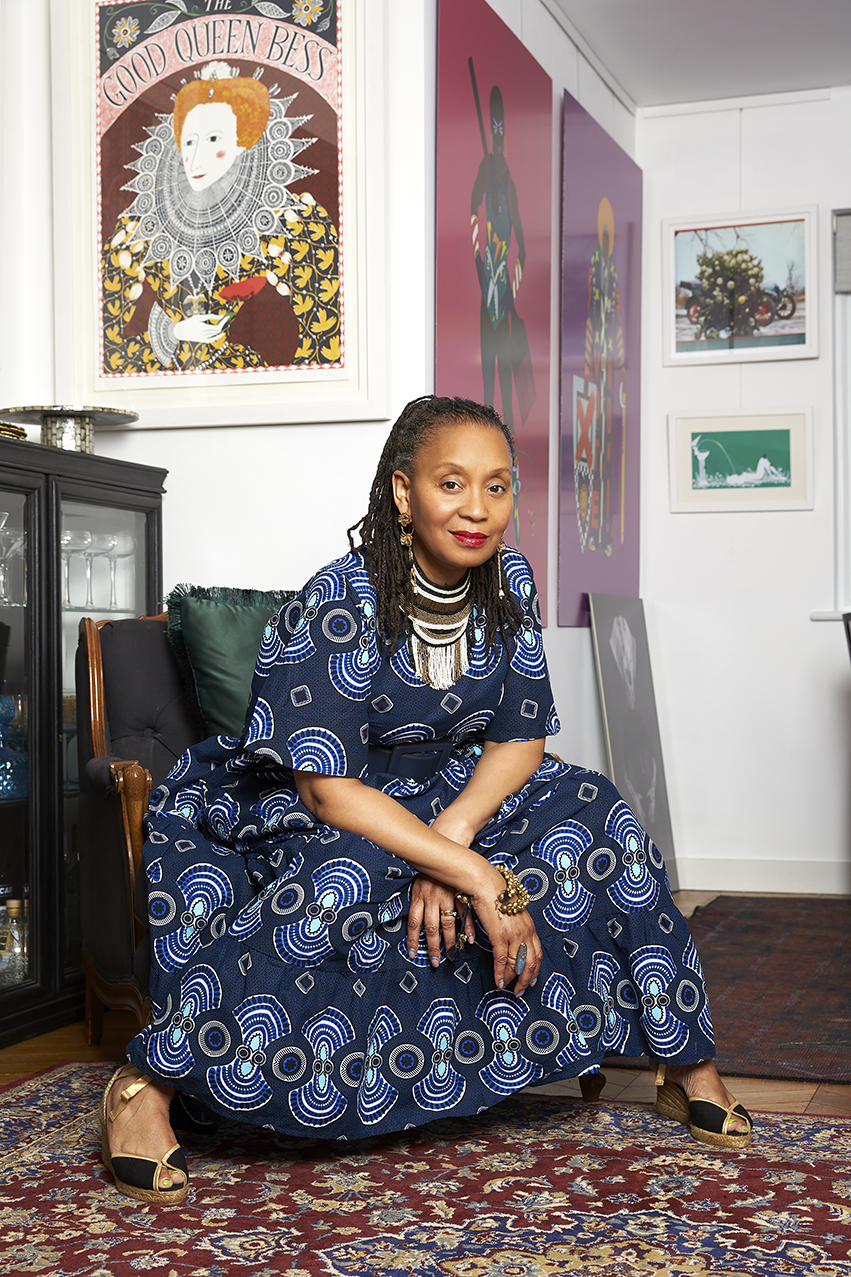
Associate Professor Sharon D Lloyd - Academic Changemaker, Beauty Futurist and Co-Founder F.A.C.E


After a successful career as a surface textile designer on both sides of the Atlantic todays Inspirational Woman Sharon D Lloyd is now a Face Culturalist. In our interview today we learn how Sharon changed direction to become a force for change within education and the beauty industry. Before social media, beauty and hair was seen somehow as having a secondary, a supporting role within the fashion and movie industry. Social media has changed that perspective which makes its teaching as a subject ever more important. After all the full name for the profession is Hair and Make-up Artist. Recently Sharon has taken on the role of Deputy Director of the Centre for Equity & Inclusion at London Metropolitan University which furthers the work she has been doing within education to highlight the differences academics and students with black and brown faces, face and to create change. Now you can read her incredible journey here.


D: I really love finding out about your past and how it has influenced your whole life, your life choices and how it brought you to where you are now. So usually that starts with where you grew up and your influences of that. I ask everyone the same question at the beginning which is where did you grow up?


S: I grew up in Battersea in London, but I think that's almost a misplaced thing to say because there were very different, areas within the borough. I'm thinking of the street I grew up on when I say this which was full of diverse aspirational people. There was a Ghanian family at the end, there were Irish families around us. Two doors down from us was another Jamaican family. We had neighbours that had lived there all their lives, all through the war and had experienced that, so multi-generational too. I mention that because in those little streets and in that little area of Battersea, to me it felt like a village. I'm very aware that other parts of Battersea didn't have that same sensation at all. Within 4-5 streets, it seemed everyone knew each other and that's rare.


D: And that feels rarer today, doesn’t it?


S: Yes it does. We grew up with that sort of idyllic childhood, playing hopscotch on the streets, there were so few cars around then that you could play cricket and football in the middle of the road and it didn't matter. Your neighbours would come out in the summer and sit on the steps by the front door because they were on holiday. I find it really interesting talking to my husband who's from Liverpool and also working class about this, because they went on holidays. As a first-generation Black British child I grew up with the impression that people like us just didn't go on holiday. It was a big thing to go on vacation, whereas where he grew up it was normal to go on a family break every year. For our holidays, we stayed at home.


My parents are from Jamaica and moved here in the late 50s – the Windrush Generation. Then my uncle followed not long after, my mother's brother. It was mum, dad and uncle, then later on his wife, that was our family. Before he got married, my uncle had a little Mini Countryman, the one with the wood panelling, and he would pile us all into the car to take us to Brighton for the day. That was a holiday for us. I remember sitting in there the first time driving down, being really excited, then being disappointed when we got out and my uncle saying ‘there's the beach’ and it was pebbles. It was really confusing because in my head beaches were made of sand. I've grown to love Brighton Beach now, and I love a good pebble beach, in fact, I probably prefer it in some ways. 


D: Did you have any fashion or creative influences when you were growing up?


S: For Fashion it was mum and only mum and not in an intentional way either, it's not like she said ‘I want to inform you.’ In terms of being creative, there was no influence, I was always interested in drawing and painting. If I think about Christmas, when I opened my presents on Christmas day, I would always have a painting by numbers kit, or colouring in books anything to do with drawing or things I could make. I would be so desperate to make things. My brothers would get Meccano kits and other kits where you would have to put things together. I'd be desperate for those too and because I knew my brothers would get bored with them in about 5 minutes, I would sit and wait for them to leave it, so I could put the kits together and paint them and then say ‘tada’ at the end, I loved that. That was it as far as creativity was concerned. It was never really encouraged like that at home apart from those occasions. When I started school, I went to a C of E school. Later mum moved one of my brothers and myself, as we are Catholic, to the Catholic school. I would have been about 8, but I think the influence of the C of E school, which I loved, was that it was run by a bunch of hippies. I think that's what sparked my creativity, that encouragement of trying it and of being imaginative and storytelling. I was very conscious of the fact that when I did go to the Catholic primary school, they shut all that down. I could be creative in the diary I had to write and that was about it. There was no messy play and no experimentation, we didn't go off and create. There was no learning through play it was by rote and while in some ways it suited me, in others I am very aware that it probably squished any creativity. Apart from dressmaking, which was nurtured by Sister Veronica.


In terms of fashion that would be mum. She had the most incredible wardrobe. My mother loved clothes. Growing up, I used to think she looked like one of the members of the singing group, The Three Degrees. She was really glam. She was always very precise about what she wore and how she wore it and she had, like I said, the most glamorous wardrobe, she was amazing. Because I was the only girl she would take me shopping, just the two of us, it was the only time I didn't have to share her. I had a really cool wardrobe as a kid, which I really appreciated. I remember marvelling at the details. One dress was bright red with a Peter Pan collar that was scalloped, and it had Daisy buttons down the front. It was a very specific look mum would dress me in. But as the sister of 4 brothers, I was a tomboy, always climbing fences, always ripping clothes and she would be despairing of another outfit that I'd ruined. But I loved the fact that she loved dressing me up. This is the memory; because now I focus on, with my own research in makeup and hair, she would focus a lot on different ways of doing my hair. Sundays were always washing clothes, going to church, doing Sunday dinner and my hair. It would feel really special when she would hot press my hair so it was dead straight, that was always super exciting. The sizzle. It’s so bad for you now, but the sizzling of the hair as she was straightening it, or she would put it in curls, I felt like a pampered puss. And that's where my love of clothes has absolutely come from. My mum nurtured my creativity through clothes, and she would make clothes too.


D: Did she teach you to make clothes?


S:  She did, but not in a deliberate way. I'm very conscious of me, sitting there with a pattern and working it out. I loved going to the library and getting books and finding out for myself and again would go ‘tada’ to mum and she would have said ‘I could have shown you that’. But she never had time in that way.


D: She had a big family to look after.


S: She used to have an old manual Singer machine which she upgraded to an electric Singer machine. And she bought me a portable electric sewing machine, it was metal, and quite heavy. I say portable but it was miniature really, and it was all mine and I absolutely loved that machine and had it for years. Me being practical, I would take it apart, clean it, put it back together again, until finally I couldn't get it working again, I was gutted, as I had carried it around with me for years. Mum also had a carpenter friend make me the most amazing sewing box to carry it around in with my name inlaid in it, it was very special. But once I started moving around as an adult, quite late on in my 20s, I lost lots of things and the sewing box was one of those things, which upset me. I loved the smell of it.

I remember the first time, being independent about what I wanted to wear as opposed to what my mother wanted me to wear. The first inkling of that was being fascinated with a shop in Clapham Junction called Maggie May. It was really radical and had cool clothes, it had always been there. But suddenly I thought I quite like that and was very conscious of being drawn to the shop, but not knowing why. It's the 70s, the Bay City Rollers were cool, and everyone is wearing either platform shoes or really steep wedge shoes. All my friends had them and I remember coveting them. But until the first year in high school mum was still putting ribbons in my hair, that was until my year tutor Sister Catherine wrote home asking her not to, as I was no longer a little girl. My desire was to look like a teenager, all my friends were into The Bay City Rollers with tartan scarfs and or T-shirts but we couldn’t afford any of that. Mum spent her money wisely and on practical things, anything that was trend led would have been really frivolous to her. Eventually I went on a school trip where we're allowed to wear our own clothes and I convinced her to buy me wedge shoes. Two things happened; the first thing, I was very conscious that it was the end of the trend for wedge shoes. The second thing was that they were really uncomfortable. I think I wore them a few more times and then never wore them again because they were so uncomfortable, I became a Clarks soft shoe girl after that. I was 11 and incredibly impressionable, everyone’s lives revolved around TV. Teen girl magazines were just starting up. My visual impressions were newspapers and you didn't see clothes there, Top of the Pops and other popular TV programmes of the time were the influences. I remember falling in love with a series called Rock Follies. Clearly my leaning towards being a feminist started early as Rock Follies was about a girl rock band and how they developed, and how their careers were swerved by the interests of different people. Also the ‘The Prime of Miss Jean Brodie’ with Geraldine McEwen. I think I was very observant of what she was wearing or what they were all wearing with this idea of 1930s costuming and what it did for the various characters. I loved my school uniform in some respects. I loved the fact it had a beret a V-neck jumper, a shirt and tie with a variety of either box pleat or A-line swishy skirts and I loved the jacket. We had a green trench coat too. I loved my green trench coat buttoned with my beret. Altogether it was very much, a 50s look. There are always one or two iconic periods in our lives that we feel most comfortable with, and as adults, how much do we veer away from that? Talking to my friends about this recently, I looked down and I saw myself wearing a linen shirt buttoned up with a with a bow tie and a V-neck jumper, with jeans, and I had my trench coat with me and my beret was in my bag. I think that there was that moment as a young girl, preteens, where I felt very secure, which is why I go back to that that look every so often.


Then of course the 70s hit, and it's disco. My eldest brother, Bruce, was always out partying and he would come back and regale us with tales of what he did and what people were wearing and we would sit on the stairs listening to it all and be really excited about it. He started going to second hand shops to buy wild Hawaiian shirts to wear to these discos, which disgusted mum. It was the idea of going to second hand shops that she saw as a parental fail. I remember him coming back and telling us he'd met Disco Diva Sylvester in a club and what they were wearing and meeting Ian Dury and what he was wearing. Amazing. I couldn't wait to grow up. Interestingly enough though I felt I was the odd bird in my family. My brother loved disco and my other brothers, one of them loved Reggae and Dub. For another it was something else but none of that was me. Then of course Punk came along and I thought well that's interesting and then New Wave. I'm not saying that's the personas I adopted, but I recognised that I could have lots of different personas. The purity of Top of the Pops each week was that you could see what different groups were wearing and you could adopt those looks. One week I could like a New Romantic another Ska would be the influence or pop and RaRa skirts. It was cultural play with musical influenced looks.


D: You said earlier that your education was structured. How did you then go on and study Fashion and Textiles?


S: I went to Chelsea School of Art to study Fashion and Textiles. At Chelsea they didn't have a degree course, it was a two year HND. I started off studying knitwear but by Christmas of the second year I was miserable because I felt my knitwear tutor hated me. I'm a real people pleaser and couldn't figure out what I was doing wrong, she hated everything I did, hated my ideas, and I felt like I was constantly missing something in the learning. It was so frustrating.

Then one day the Head of Textiles, Peter Pilgrim asked ‘what are you doing?’ We got talking and I said ‘I'm not happy.’ He asked to see my work and asked ‘are you really a knitwear person?’ The answer was ‘no.’ ‘Right’, he said, ‘I'm going to move you across to textile print,’ because all my sketchbooks were full of drawings and experimentations with colour and layering of colour because that’s what I was interested in.

Looking back for me it was about surfaces and not about the manufacture of creative shapes, though I still have an appreciation for a good knit. Moving over to printmaking, something clicked and I exploded with ideas. I spent a month in the V&A in the Persian section and came back with ideas inspired by Persian armoury and illustrations of little soldiers with bows and arrows flying across the page. After college I managed to get space in a shared studio in Old Street, East London, it was really super cool and I worked from there as a freelance designer for several years.


D: It's amazing how meetings like that will change everything for you, because I had a meeting like that too, which took me into photography.


S: Years later, I got into teaching. At one of the Higher Education institutions I began teaching at I taught fashion theory not textile theory. I would teach fashion students but would have to teach graphics students too. They threw lots of different lectures and specialisms at me that I had to deliver.


A year, two years into the job, they decided to set up a Hair & Makeup degree.

Ours was one of the first degrees in the country in makeup and hair. Over time we developed it, honed it and made changes so it's very different today. That development of the course was really exciting, we had lots of great ideas, some of them worked, some didn't. That comes from breaking new ground and building something. I remember being on the train once meeting up with an academic I used to work with and he asked ‘what are you doing now?’ I said ‘I teach on the makeup and hair course.’ His reply, ‘huh that's not a real degree.’ My answer was ‘I beg to differ’ and told him off. It was always my mission to prove it is a real degree, and to have everyone acknowledge that it isn't made-up or frivolous.


D: It's a very important part of the fashion industry because without good hair and makeup artists, you do not have a shoot or the movie business, because you need special effects. We hear about actors who sit for hours in hair and makeup so that they can become a character. If you do not have that you do not have movies, you do not have theatre, you do not have fashion shoots, you do not have runway shows.


S: The thing we can see now, with the explosion of social media suddenly everyone's looking at everyone else and in a much more intense way. So lots of things happened at the same time, where lots of people realised the importance of how they present themselves on screen or in person.


D: As you know, there's a huge environmental impact from the beauty industry like the fashion industry, because they are both very reliant on plastic. It’s more obvious in the beauty industry than in fashion because in fashion it's hidden, it's in your clothing, you are not necessarily aware of it. Whereas in beauty you can see it in all the packaging used.


You are a beauty futurist. What's a beauty futurist?


S: A beauty futurist is someone that thinks about, how we wish to present ourselves. I think it's really interesting when we think about beauty, I think we are so stuck on this historical perspective of what beauty is. We rely on the known. Whereas with so many other areas of design there's a freedom in thinking about investigating the impossible. Beauty has not had this critical mass of theorists looking at it. It's still at the very beginning of what it could potentially be in understanding cosmetic ideals. In addition, a lot of those ideals are patriarchal and westernised. Well, we are taught that they are westernised, but in reality when we look further afield we can see so many other influences. As a beauty futurist, it is about taking off those shutters and understanding how we first presented ourselves. It's more than what forms of media has, for the last 100 years, presented up to us as women, mainly women, as how we should be seen. Being a Beauty Futurist is about giving us the tools and the language to move beyond the function of the aesthetics and that will ultimately be freeing. What that freedom is, is up to the individual. Whether it is about having more cosmetics applied to us or being more selective about what's used on our skin, or even choosing no cosmetics. But the interesting thing is that we have choice.

What we're dealing with now, seeing virtual reality in play, is the potential. Rather than wait for things to slowly evolve, it's an opportunity to leapfrog all expectations of what beauty ideals are and reboot them.


I work alongside another beauty futurist called Alex Box and we have a very particular take on where AI could be taking us. There are other people out there talking about it too. Once we get rid of this idea that it is gendered, that it is frivolous, that it's seen as something that doesn't have impact. Once we remove those negative patriarchal connotations, we will move into a new era of really appreciating what it can do, not only for our visual appreciation, but also for our well-being. I think to dismiss the importance of looking after oneself, is bizarre.


D: The self will always remain whether there is AI or not.


S: There you go.

As an aside, one of the things I think is really interesting is when people say, ‘why, are you approaching your ideas like this?’ I think it's because I was a textile designer. I'm applying all the crazy and interesting ideas I had in terms of textile development, in surface colour and applying it, it's the same approach. I am only applying it using different surfaces and different materials. 


D: You touched on how beauty is seen from a western ideal. As we know, fashion steals from other cultures. How does this impact on the beauty industry culturally, and what does the impact of Western beauty ideals have on black, brown and Eastern people and how does that feed into education?


S: I think in terms of beauty and race, unlike, fashion, which has been about adopting so many aspects of other cultures. Beauty does the opposite, it has denied. It has taken away. And it's been that consistent denial that has been so debilitating. Because it's the denial of the self. While we can be critical and we talked about sustainability; in many ways, while beauty is looking at sustainability that levy of blame is mainly at the door of fashion. I think within the next 100 years if we can put our heads round it, we can resolve sustainability. This in terms of the debilitating of the self is going to take more than 100 years, because it's been generational harm.

When I talk about changing the language around beauty ideals it is an attempt to resolve that generational harm. problem with language is that it's so harmful. One of the things I'm arguing about in the article and writing about is the way that beauty companies, refer to black skin as darker, it’s not darker, you can say browner. They go round and round and round in circles, they say deeper, they won't say browner. There are a lot of discussions about this in the industry that say, it should be deeper skin tones. But what does that mean? We still have a lot to unpack.

I wrote an article called ‘Black Girls Don't Blush’ because they do. What we're all guilty of is not properly observing black skins. Because there are so many images that are overwhelmingly white and youthful. There is no room within many visual interpretations of bodies for properly observing what black skin looks like in different states of being. It's like anything, if you haven't got your eye in you are never going to see it. 


D: You're the co-founder of F.A.C.E Fashion Academics Creating Equality tell us what you are doing there to elevate teachers and students.


S: I had been involved in several projects at my previous university where we looked at the awarding gap. Even my own Black students weren't succeeding in the way that I wanted them to, and I kept thinking ‘What's going on here? Why? Why?’ and ‘Why am I failing them?’


Then I began to realise that it's actually about the student experience. How they feel that they can succeed. What we deliver in front of all the students, lands very differently to a Black student if they are the only minoritised person in the room. There's no discussion about their lived experience, their heritage. They never get to talk about deeper (browner) skin tones. They never talk about Afro hair textures. Which means they are always going to be othered. When I stepped into the role of Course Leader, I made it my business to have a much more equitable experience for students by firstly employing a black technical instructor to teach makeup and hair. You do these things bit by bit because if you do it all at once, it's too radical for people and it frightens them. Then we changed the products in the kit, then we changed the language throughout the modules. We didn’t do it all at once because we were evolving too. We were trying to figure out what works, what doesn't work and then we began to have those conversations with students, about the why?


Then the pandemic hit, and the death of George Floyd. I was contacted by an ex-colleague and we discussed how bereft we felt in our institutions.’ At that point, we began to have those bigger discussions with Black fashion creatives and Black fashion academics. At the same time having those conversations with other academics that were also going through the same thing was; ultimately it made me really brave. I think that the remit of F.A.C.E is to extend that bravery amongst other Black and Brown academics and our Black and Brown students. 


D: Last year you were named a Champion for Change by Vogue. Has that helped elevate the messaging?


S: Not really, I think people now recognise that I am quite serious about it. But has it made anything that we're doing more actionable? No. No. And it's by sheer force of will that I'm still knocking on doors saying can we talk? We need to talk about this issue.


What I want to see is real change. Not only words. I want action. I gave a talk at the Royal College of Art last year, when preparing for it I realised that we're still playing with the same toys that are in the box. So instead, I led a discussion about decentring our delivery of knowledge. Which is quite radical for so many people, challenging this white centred patriarchal approach as the beginning of everything, the centre of everything, and to take other approaches. You can see people thinking, can we do that? Yeah, you can. You don't have to start ‘the history of' at any particular point, but the problem then becomes, what do we start with? I'm at that point now, of, where do we begin?


D: So that's what's moving you forward to create change in the future.


S: I'm on a bit of a fact-finding mission at the moment. I did a wonderful conference at Oxford University a few years ago where I suddenly realised, we don't have to stand there and read a paper out loud. A conference presentation could be poetry or a performance. Which at the time I thought was so enlightening. In fact as a consequence I ended up putting my makeup on in front of everyone, while I read my paper. The point I was trying to make was that we should be querying how we are informed by what cosmetic ideals are.


D: Brilliant, that was a great idea.


S: I was emboldened by seeing everyone else in that space. What we want to do by decentring is take how we even acquire knowledge out of its known space. If we're going to change this education system which is failing many of our minoritised learners, we have to find other ways, of delivering knowledge. 


D: How do you see the future?


S: I'm a really positive person so I see the future as a way where we begin to adopt more equitable practises in how we engage with each other, culturally. The way I see the future is one where we think about education and knowledge acquisition as a long term process. I think one of the problems that we have with education is that the system is built where we do the learning, primary, secondary, further education, higher education, postgrad, you're done. But what we need to be thinking about is lifelong learning. It's quite radical to think where we stagger those points, where we stop and we acquire knowledge.


The future for me, it's really exciting because, I like change, even change for change sake because it feels like we're moving on, we're living, we're evolving. That's how I like to see the future. 


Links


Instagram :   Face Culturalist

                     F.A.C.E    

                     British Beauty Council


LinkedIn :     Sharon D Lloyd

                    F.A.C.E


Thursday, 28 October 2021

Focus on Aja Barber - Author and Activist


I have always really liked no nonsense people and this is one of the reasons I really like Aja. She is straight talking and upfront. She is also open, warm and very lovely. Being an advocate for planetary change is not an easy job yet she does it brilliantly. Her one rule is that you be cool and polite and that is a good rule in my eyes. So, grab a cuppa this is a great chat.


D: I normally start with where you grew up, I know you've been talking about this quite a lot recently, so I'm just got to kick in there, Aja where did you grow up?


A: I'm from Reston Virginia which is a small town outside of Washington DC. My family roots: my mother comes from Alabama and my dad comes from Pennsylvania. However, I recently found out that his people came from a plantation in Front Royal Virginia which isn't that far from where we live. So I would say Virginia is in my blood in this weird way.


D: Do you have siblings?


A: I do, I have two sisters. I'm a middle child.


D: I have sisters as well I have three, I'm the eldest.


A: My dad came from a family of all boys and I think that he's had a completely unique experience that he didn't think he was going to have parenting. My sisters are badass, so I think he's sort of like, OK. My sisters are, in their own right, both doing really well in their fields, so I think that my dad is sort of like hum (a positive sound). I remember reading the title of a book saying, unsuccessful men have girls. It's ridiculous, it doesn't even like take into account that there are plenty of unsuccessful men that exist on the planet who only have sons. I have two sisters and I think there are amazing. Also growing up people would say to Dad ‘Ooh 3 girls’ in a negative way, when actually it’s pretty badass.


D: Also what they were saying is disrespectful to women and girls.


A: Its disrespectful to women, yeah totally, I forgot what the title of the book was exactly but it was insinuating that if you're unsuccessful you'll have girls, but that's just the way of the world and patriarchy right?


D: Totally. I felt for my dad quite a lot of the times, he was an only child and he had four daughters. My mother was the youngest of seven and five of those were girls. He would come home from work and we'd be sitting in the front room with our friends, maybe watching a movie and crying passing the tissues. He would just walk in look at us and carry on.


A: Always outnumbered. I don't know that dad ever thought that he would have 3 girls but I think it's been good for him, (laughs)


D: I don't know if anybody is ever prepared for all girls or all boys.


D: At this point I would normally ask what your childhood influences were, to create the person you are today. But doing my research I could see that what you do is literally in your DNA, as the thread winding through your whole family. Social justice from your grandfather who was a civil rights organiser, your mother's financial guidance and from both your parents with the gift of travel.


A: Yes, so much of who I am is definitely impacted by the things I saw and in the role models I've had. My grandfather passed away a year before I was born so I never got to meet him but I have heard a lot about him, and am kind of a bit jealous of people that had grandads in their life because I know that, that's a really special bond. What were my other influences growing up? Enya, she was my favourite singer when I was nine and I just think she's so cool. I think for me there's always been…….a longing in this weird way to change things and I think it has to do with growing up in a country that doesn't necessarily want you. I feel very much like someone who's very rootless in a way, I don't feel particular strong attachments to the United states, because of the atrocities done to my people and others. I remember in school on International Day, all the kids would draw the flag of where their ancestors came from and I would literally pick a random flag in Africa as I had no idea. I thought, ‘wait a minute that's not fair, that's not fair’ and I think it was then I started to really question all of them. The more I uncovered America's history and the Pledge of Allegiance, I used to think this is weird, I don't really want to pledge to this country, I'm nine years old. I'm not going to war. This is weird. So I started to really question America's involvement in things in our history. I think when you start to really, really question these things, even as a young person you’ve got a bit of activism coming your way as an adult.


D: You just mentioned that you're not going to go to war for this country. Something that you said which really shocked me was that returning GI’s from the Second World War were not treated equally.


A: Black returning GI’s were not were not given - basically the GI bill was created so that any returning GI could get a down payment for a home or a loan for school. And for Black GI’s the red tape made it patently impossible to do so. What people don't realise is that it was policies like the GI bill that built the middle class of post war America. In the state of New jersey one in five homes was purchased through the GI bill. So it goes without saying that, that has given some people a very uneven advantage but everybody says, ‘oh get over the past’ but the past formulates what America looks like today. So there's no way that we could have peace and unity until people acknowledge the past and right the wrongs, because that is why America looks the way it does today. It's not because white people are better at making money or better at accruing wealth, it's because there has been systemic laws which put white people in a place where they are in a place of advantage over everyone else. I talk about inequality so that people can really start to understand. It's not like I hate white people. People are like ‘grrr, you people hate white people’ but anytime a black person says ‘hey do you wanna hear about this thing what this country did?  If I hated anyone I wouldn't be in the position that I'm in, doing the work that I do, as I spend most of my time talking to people.


D: And it's not just America it's a worldwide issue you know Britain has……


A: …..the Windrush generation, yes absolutely. In general when we unpick the histories of so many places at the top of the financial market what you'll find is the exploitation of countries that are extremely resource rich. That's been happening for a very long time. How do we build a world that we consider fair without the acknowledgement of that? Without thinking about how we make things better in the future? Right now because of climate emergency I think we as a world have a tremendous opportunity to rebuild and to unpick some of the wrongs of our past. I do feel however that some governments are setting things up, to do the same thing all over again. You've got an infrastructure that is crumbling, you need green energy, green solutions, and that's not going to come from the US alone. We are not going to be able to come up with these solutions alone. We are going to need materials. Where are the materials coming from? How do we treat the countries that have the things that we need?


D: I had a I had a conversation with that a taxi driver the other day who was from the Congo, he was driving an electric car and we were talking about electric cars and the fact that a lot of the mineral resource that is needed for the batteries for the cars is coming from there.


 A: And it is the same with iPhones. But the problem is, and I always get this in the conversations that I have about fast fashion people and others say, ‘how dare you say that. You have an iPhone’. My reply is ‘yes, but I don't buy three iPhones a month’. This is still something worth talking about but it's not at all comparable to the scale at which people are buying fast fashion.


D: When did fashion become important to you?


A: I came from a childhood of extreme frugality from my mom’s side and because of that I was very determined when I needed to have certain a thing. I realised at a young age that your sartorial choices could make an impact on your popularity and how other students treated you. I didn't have the things that put me in with the in crowd. So I became very obsessive about those things, and that led me to a true interest in the fashion industry. At first it was having the right material items to fit in with your peers, and those who are mean to you. And then it was oh, actually, I like learning about France, I like learning about designers, I like learning about creative directors, actually I really like fashion. So what came from a need to fit in through material possessions, became a lifelong interest. I would say, from my position as someone who never felt like they had the right clothes to fit in with their peers, that I was prime for the picking, for a fast fashion market. I was the perfect fast fashion consumer because I wanted all those things so that I could be accepted by people who were never going to be nice to me. I remember when fast fashion swept America, I remember seeing all of this happen subtly throughout my life. I was born in the 80s and grew up in the 90s. The 90s were the last decade where we had a bit of normalcy with the fashion calendar. Then I remember when some of the bigger brands from Europe started to enter the US market and brands that I really liked then, and who are not doing so well today, started speeding up their seasons to counterbalance some of the uber fast fashion from Europe. It happened very quickly, this is why I tell people I'm quite hopeful that perhaps we can pick this apart, because it has happened within our lifetimes maybe we can clampdown on it.


D: However this morning an email dropped into my inbox that was saying Primark are seeing growth again after lockdown. But they didn't degrowth during lockdown.


A: And that’s expected. The thing is the changes that I think need to happen aren't going to happen overnight. People aren’t going to lean into consumerism. What I want to do is unpick those behaviours for people, and to get people to think about, ‘why am I participating in the fashion industry in this way? Do I shop out of need? Do I shop out of want? What is that little voice that tells me that I should buy all the things? That I deserve it?’ As we get to the bigger issues in our society, I think we will start to really think about those and how they impact how we shop and buy. You get people really digging deeply into this topic. I always tell people, our generation is prime for fast fashion consumption, because we can't buy houses. It's one of those things that if you create a society where there are only a few milestones that only a few people can reach, then, of course we're gonna adopt a YOLO attitude. Climate emergency is one of those examples where, so many governments of the world should be paying attention yet have actually been complacent. So it’s no surprise we have a YOLO attitude towards everything. It makes us, what's the word I'm looking for? Despondent, I guess, indifferent towards creating that sort of change. So we are in some ways in a perfect position to feed the type of consumers that just buy and buy and buy things because the world is heating up. Then you can't cover some of your basic needs, because we created a world where you can't do that, and so it makes a lot of sense to me. So I'm all about picking apart those actions and getting people to really understand why they choose to engage in things that way. 


D: I do love your frank and honest no-nonsense approach, to cut through and get right to the heart of these things, your voice is amazing for this.


A: I made it that for myself because here's the thing, as a fast fashion consumer I began to be someone who liked to make things. That’s when I realised ‘oh I made a dress and it's almost wearable and it took me 10 hours to create’. It took a lot of time for me to make this dress, how is it that this store is selling a design, that is way more complicated for $10?  I don't understand, I don't get it. How did this person survive if they made $0.50 an hour to do this? So in the back of my head I had to ignore the things that made common sense to me. I think I needed a wakeup call in the form of a slap in the face. And so I try and try and provide that for other people (laughs).


D: What do you think your slap in the face was?


A: One year I added up bunch of receipts for a store I used to frequent. At the time I was earning, by Virginia State standards, poverty wages. There have been times where my employment has been an extremely low income. I have been through many recessions since I graduated. Moved back into my parents’ basement several times, throughout my adult life. Always a proud moment…... So it had been one of those years, where my income was pretty low. I added up the receipts that I had spent at one store and I was looking at myself thinking ‘I gave how much of my money to a billionaire?’ It was a substantial portion of my earnings that I had been unwittingly giving away in little piecemeal shopping. You know, going, I deserve this, 50 bucks here, 100 bucks there. Do that a couple of times a month and you will have easily spent, well over whatever you even think you were spending. That's what happens. There were a couple of years where I added up what I had spent it was several $1,000 and I'm looking at these brands and thinking, ‘well, this is owned by a billionaire who doesn't even pay people a fair wage, there is no way they can guarantee it’. And you know, I wanted to kick my own ass, I was pretty mad with myself about that, but I needed to actually really see those numbers in front of me and keep track of those receipts in order to really get a handle on my own spending. The thing with fast fashion is that low price, always makes you think, ‘oh it's nothing’ we think it's harmless in regards to the garment, we think it's a harmless treat. You think that it doesn't have an impact on the planet. But in actuality that $5 t-shirt accounts for a lot of different things.


D: Also from a young age, your mum was teaching you that consumption was a trap.


A: I remember when the fast fashion stores came over here my mom was like ‘I'm not shopping here that clothing’s really cheaply made’ and that's another thing, people love to go ‘oh poor people don't want to shop well’. But my mum grew up pretty economically disadvantaged. I think middle class people do this thing where they want to participate in the system, and everyone pretends that they are some sort of fighter for the poor when it comes to talking about why the system should exist. But in actuality many people that are economically disadvantage might not even want to buy that cheap clothing. Maybe they want the quality stuff too and they know that it's not quality. So I would say don't put this on poor people.


D: I couldn't agree more I also grew up the same way my grandmother helped my parents as far as clothing for us was concerned. We grew up with a Primark in the centre of our town. We never shopped there as the clothing was not good, it was not quality, they would save, and they would buy us good garments that would last and could be passed down. I really only wore other clothes at the weekend, we I spent most of the week in our school uniforms.


A: There were several times my mom told me I was wasting my money on crap and boy is she smug today (laughs). Oh, she is so like ‘I'm not gonna say I was right, but it's nice that you finally know I was right’ (laughs).


D: Yeah, it takes a while to get to get to the point where you're happy with your mother being right.


A: You know what, it's insufferable, but I just have to acknowledge it and get on with life (laughs). 


D: Something you have said is that it requires a lot of dollars and pounds from the middle classes……..


A:….to make a billionaire!’ So this is something I learned when researching my book. I looked at the wealth breakdowns of America, the middle-class person that screams ‘you're being really classist by critiquing the systems that oppress half the world’, needs to realise that America is a country that consumes most of the fast fashion on the planet right now. China consumes more, because of their population. America consumes more per person generally, and so, America is the country I wanted to look at. What I found is that America is broken up into a bunch of class systems, you have the poor and the working poor people. People who are at the absolute bottom of society. These are people around the poverty line, and they account for minus 1% of America’s wealth, they are not positioned as political or economic decision makers at all. They are scapegoated as a burden. So how can poor people be responsible for this system? The next class up you have, is the working class, which controls 3% of the total net wealth in America and they too are not positioned as political or economic decision makers. Then the next class up is middle class. Everybody is talking about how the poor people shop and that's why we have these systems. I want people to explain to me how can these two groups create multiple billionaires at the top of these brands? That's why I think it's absolute bullsh*t when people say its classist to critique the system of fast fashion because ‘what about poor people’? I know plenty of people throughout the whole economic spectrum and there are a lot of poor people that think the fast fashion system sucks, so let's not scapegoat poor people and recognise that it takes a lot of middle class money, to keep this system extremely profitable. As someone who was once on a low income, I think it's very important to make the distinction that I was never poor, I always had resources, I always had certain securities that other people simply don't have. I always had the option of moving back in my parents’ basement, wasn't fun, didn't make me poor. Economically I would have liked to have done better in my 20s but, regardless of that matter I was never poor. That’s something that I really breakdown in my book.


D: Fast fashion has a lot to answer for in showing us how we treat people in the global South. The pandemic that we're living through at the moment has really highlighted it again. It’s shown us how badly we treat the people who make our clothes. Rana Plaza was one of those examples that was held up to the to the world showing us how women and garment workers are being treated. And again, now with cancelled orders.


A: Even before Rana Plaza. This is the thing, we have a very short memory for the oppression of others in the global South. As a kid I remember learning what sweatshop labour was when I was 12. A TV host had been making a clothing collection for Walmart and someone had gone undercover in the factory her clothing was produced in and saw that there was child sweatshop labour happening. That was all over the news for months. How did we forget about that?


D: Was that in America?


A: Yes it was in America, a woman called Kathy Lee Gifford who used to host Good Morning America. A big show. I think that she was very much appalled by it, I felt very sorry for her being in that position, because I think she was one of those people who were, you know, she had agreed to do this line, but she hadn't been hands on enough to the point that she actually understood what was really happening. So it caught her quite off guard. For weeks everybody was talking about sweatshop labour in America, how did we become so OK with it? So it wasn't even Rana Plaza that had happened. But I think that because, once again we are facing so many different things, I do think that people have a tendency to just tune outThere was a building back collapsed in Miami recently yet, there was very little news coverage on it and I feel, and I'm not trying to be a tin foil hat wearer, but I feel like the media refuses to cover things that are connected to the climate emergency. Scientists have been warning the city of Miami for years that things like this will start to happen. I feel there's a deliberate avoidance of talking about these things in our society.


D: News channels in the UK the BBC and ITV news are putting out the same, exactly the same news side by side. We're not getting a varied worldview.


A: It's a shame really when you can't depend on the news to show you the news.


D: The government here are talking about changing Channel 4 so that it goes into private hands which would mean you get some multi-millionaire running and deciding what we hear instead of being publicly owed.


A: Monopolies aren't good for our society and that's the same for fashion. That’s what I tell people, and that is what we are up against. I think, particularly with the fashion industry people just do not understand how these decisions impact all of us. How it impacts the climate, how it impacts the global South, how it impacts governments of the world, and I think if you can really break it down to people in a way that they can start to get it, that you can get them to make some changes in their life. I get messages everyday saying that and that makes me feel extremely fulfilled, because one thing I know for certain is that the fashion landscape which I was participating in did not make me feel fulfilled at all. It made me feel grim.


D: What do you think needs to be put in place to make the changes that we need to see?


A: We need regulation for the industry and we need to unpick consumerism within our society. We need to educate children about clothing and consumerism not just because of all the issues I talk about, but because consumerism is pervasive to children it gets in at a young age. I felt like I was left out because I didn't have the right clothing. I remember going back into school after Christmas, oh my god, so many of those kids would be like I got this and that. I remember hating my peers during that time period. I would make up things that I hadn't received, because it was a game of 1 upping. So why not beat them at their own game and lie about all the things you had received (laughs). Without really knowing it, I've always been someone who really hated the way consumerism and materialism becomes pervasive in our society. I remember when the first iPhone came out, I was living in New York City. I was someone who actually avoided having a smartphone for many years, I was the last person in my family to get a smartphone. Why? because I could sense that there was something sinister about it, but also because I worked in the TV industry and I think that people are largely very abusive of other people’s time in the entertainment industry. So what I wanted to do is limit people's access to me. I did not want to be the type of person who was on email 24/7. I wanted to be a person who had working hours. Now today, I am someone who is on email 24/7 but I'm my own boss, so I have my working hours. But as someone who worked in the TV industry, people would be like ‘why didn't you answer that email I sent you at midnight your time?’ So in order to limit that, I refused to get a smartphone which was great for a while.


D: I worked in advertising for a while and it was the same thing.


A: I had a brick phone for years it was wonderful.


D: Now they are putting Wi-Fi everywhere and in the tube.


A: Yes, so you can never turn off. 


D: That used to be a place of peace and quiet, me time.


A: So I was very late adopter to this technology, part of it was for boundaries, part of it was because I felt that there was something kind of sinister going on there. I remember people lining up to get the first iPhone and thinking what a bunch of schmucks. Why would you want to be tethered to your phone constantly? That is what that item is going to do for you. It is going to tether you to the online world in a way which you probably won't enjoy sometimes, but you won't even notice. And then it's going to take over all elements of your social life. So I could see the direction things were headed in. Now, there comes a point where you can't really fight it anymore if you want to participate in society. Gotta get the phone. So yes, today I have a phone, but I held off for the longest time.


D: With the phone it's like falling into a rabbit hole, if you open social media and start to scroll, suddenly half an hour is gone.


A: That's exactly what happens, it happens all the time. I try and have a no phone in the bedroom policy. I don't always have that because we don't want alarm clock, so if I need to wake up for something then I do have my phone on my bed side table. But, I also catch myself doing that, one minute you look and it's midnight, the next time you look it's 2:00AM and you're like ‘oh God what have I done’. So yeah it's pervasive, I've always known that and you know I try and limit it, but yeah, it is a very pervasive thing.  I remember definitely feeling like a freak show though for not having an iPhone. People would say ‘ohh you cannot afford one?’ ‘No, I don't actually want one.’ Then, they would be like ‘what sort of weirdo are you?’ Which is also a weird thing that our society does.


D: I worry about little children sitting in prams because, even when the phones weren't around a book wasn't handed over in the same way.


A: I feel for parents, because I can see how easy it would be, to hand over the phone and to have peace and quiet for a few minutes to enjoy a coffee with a friend. But I will try, if I'm lucky enough to have kids, to limit that if I can. But that’s easy to say before you become a parent and then find it's completely different than you had envisioned.


D: Something that you have said is that ‘we're not talking about race and class enough in our society and by doing that were hindering the conversations that we need to have to tackle the issues’.

A: Absolutely I think that until America and Britain acknowledge their true and real history we can't actually move forward. It would be like if you had two brothers, and one of them stole money from the other and built an empire and then said, why can't we just forget about this and be friends? Let's just start from the beginning. That's essentially what the world looks like. We just need to get over the past and move forward. But that's not how it works. If your sibling stole money from you and built an empire you would say OK, yes let's start from the beginning. Now give me all that money back, so that things are fair and equitable.

D: Now’s the time to uplift everybody, starting with paying people properly.

A: Yes we have this opportunity to really reset. That's how I choose to look at the climate emergency. Maybe I choose to look at it because it's terrifying and scary and I have to look at the things that could be hopeful about it. I think that we have been given an opportunity to unpick some of these things and I can see that the governments of the world are not trying to have that conversation but they need to. Even with the fossil fuel industry, did you see the news about Exxon? Every government of the world should be trying to move their seat farther away from Exxon right now. I feel they are going to ignore what's been revealed. How their lobbyists were basically saying ‘we target politicians to pay, to vote in our favour’ that's essentially what was being said. This, is something that people like you and I have always suspected, and it was just confirmed on video. I feel like we as a society are pretty saddened to see that it's only a niche group of people drawing attention to this and saying ‘everyone you need to pay attention to this’. I would like to see our entire society outraged at Exxon right now.

D: Absolutely. My husband has been working for years on sustainable energy programmes. A lot of times he’s been hitting his head against a brick wall, getting to a certain point and then all, the goal posts will change. Governments in different countries and here, would say okay we've given this enough money now. We are reducing our help with tariffs et cetera. Then we find out that they are propping up oil and gas. Smacks of greenwashing to me.

A: People also don't really realise that the fossil fuel industry keeps fast fashion afloat. So many, of the materials that are in fast fashion are fossil made. Most people still have no idea that polyester comes from oil and that it will often never biodegrade. It is in everything by design. The fossil fuel industries have been behind this massive push to get Poly fibres into all of our clothing. I think when people start to really understand these things, that things will change. However I still don't think that the word is out there, and that polyester comes from oil and is essentially plastic clothing. I know this because it was something I didn't know about until I was an adult.  


D: Well of course and this whole area that we're looking at works perfectly well, for extraction, and exploitation of the people and the planet.


A: Yes, but people don't see it that way when you're making shiny things that make them feel brighter, happier more attractive, and more accepted by society. Our society has done this conversation a massive disservice through patriarchy, by painting the fashion and beauty industries as frivolous, silly things. Instead of businesses that are responsible for billions of jobs and billions of dollars and world economies. We've always done this thing where we negate the fashion and beauty industry, and the arts in general as frivolous and silly because our society does that. Because of the patriarchy it's very easy to negate the impact of these industries.


D: An impact that is felt mostly by women.


A: Yes. 


D: Historically it was women here in the UK and America that were the first garment workers. Then when wages rose, the work started to offshore to the global south so it reverberates all around the world, Vietnam, India, Pakistan Ethiopia.


A: The thing about the fashion industry is that it never improves, it just moves to another country were its easier to exploit people. That's something else that I've seen throughout my lifetime. I remember starting to see made in China on everything and then it moved to made in India, then Bangladesh and Vietnam. I've seen this happen within my life span. I've seen how the fashion industry moves to the global South in search of the cheapest labour. But I didn't recognise that this is what was happening until I started to do this work.


D: That's exactly what was happening. I remember the conversations about all of the unemployment the moving away of the business was creating here. What is going to happen to all the people and factories and the machines here? It leaves a wake of destruction everywhere it goes, and it takes the economy away from each country and the women who work in it as it does so.


 A: I always tell people if we fight for ourselves, we can fight for others as well. But the problem is I think, in many ways we've given up that fight. To sort of leap back to my own history, both of my parents are from cities and places, or have lived in cities and places that are now economic ghost towns. My dad grew up mostly in Pennsylvania later on California and he's lived in St Thomas for many years. But, York Pennsylvania used to be a thriving hub. Pottstown Pennsylvania, they all used to make things, Caterpillar bulldozers I think, Harley Davidsons. Pottstown was known as a place that makes pots, because my grandmother worked there. They used to create things in that part of the world. Now things are not created there, and the economic ripple can be seen in the poverty and the drug use in the area. My mother is from Mobile Alabama, which is a massive shipping port that used to be so thriving, when mom was a child. Now, no, and you can see this all over America, these two cities these places I've talked about are not the exception to the rule but the norm. But the American worker doesn't see how these things have negatively impacted them, because certain politicians love to get you to believe that it's really the immigrant that has taken your job.


D: Always the other.


A: Always the other. When they can turn you against each other, they can control you. There is never a real or honest conversation about, if you don't like people on benefits, you should actually really hate Walmart, because Walmart is one of the biggest employers in America second is Amazon, who are also just like and Walmart. Walmart does not pay most of its workforce a living wage. Which means the vast majority of those employees are on some sort of benefit or governmental assistance. Meanwhile Walmart continues to turn a massive profit for years and years and years, because it doesn't pay a living wage. Which means the American taxpayer is subsidising the Walmart worker, while the Waltons remain one of the richest families in the world. That’s who you should be mad at.


D: I couldn't agree more it's the same here.


A: Walmart used to own Asda in the UK too. If America is a country of pulling yourself up by your bootstraps but the biggest employer in America doesn't actually pay a living wage in most states, how are you gonna pull yourself up by your bootstraps how can that happen?


D: It can't happen. They have so many tax breaks, and the tax payer is paying for those and subsidising business. If they were paying taxes properly to the government to everybody……


A:…… and paying their employees fairly. They probably wouldn't be billionaires. They'd still be rich beyond belief though with more money than you could spend in 3 generations time or a lifetime on earth. There are businesses out there that you can talk about, who do, do things differently. I know that there's a business in Seattle Washington I think, a Tech guy, who decided that he was gonna pay everyone in his company 70K and he wasn't going to make much more than that. This is a company that is not only economically thriving, but the output that you get out of people that are paid fairly and treated fairly is much different. I saw this even when I worked in the entertainment industry. The jobs that I worked on where people were respectful and kind to each other and you didn't have to nickel and dime over your pay check were the happiest shows. They were the shows where people were the most creative, the funniest. I would say really worked as a team, because people are happier when they are treated nicely.


D: Of course, and all of this goes back into the economy, so the economy can grow in a fair and just way.


D: You have just finished writing your book. (Aja’s book 'Consumed' is now available to buy at all good booksellers or click here for links go get a copy, it’s a great read, easy to understand and be able to get your head around all this info.)


A: I would say, for now, I'm never writing a book again (laughs). I am not writing a non-fiction book again, as writing non-fiction is a lot of work.


D: Can you tell us anything about it?


A: Everything I've talked about in this interview. It's basically been a complete taster, I talk about my history, I talk about wealth, I talk about why we buy, if you if you've enjoyed this interview you will like my book. Because this is basically a brief taster of what you're gonna get.


Can I also say I'm super nervous? So many people are saying ‘I'm really excited for your book’. And I'm terrified. I just watched the series Halston, and Halston used to say ‘reviews don't matter’. I basically say that mantra to myself everyday. Just in case, I’ve tasked my partner with reading my reviews for me. I've said, ‘don't tell me how mean they are, just tell me if somebody really hates me so I can avoid them’ (laughs).


D: But you have this on a daily basis, you are constantly putting out fires with people.


A: It's one thing when it's a person on Instagram, it’s other thing when it's maybe a publication you respect who isn't really digging where you are going. But I'm sure it will be fine. There is something that is slightly terrifying about the world having something in their hands that you've written, and people writing you reviews that are cutting, (laughs).


D: The thing is that we all have to start telling these stories, we all have to. If you don't put it out there, it's not out there, so people won't be able to pick it up and read it.


A: It's putting yourself out there in a different way which is slightly terrifying to me.


D: I understand, and of course putting it into book form means it can pass from person to person. And maybe into the hands of somebody who maybe doesn't have access to you on social media.


A: That's what I love about books and that's why I never stopped buying books. I remember when E readers came out and everybody said ‘oh everybody should get an E reader’ and I was once again being technology adverse. I get the purpose of E readers, I think going on holiday it is great as you can pack a bunch of books into one slim item. But in general, nothing beats the feeling of a book, nothing beats a bookstore, nothing beats the smell of a book, nothing beats having a book that you’ve read that has really impacted you and giving it to a friend and saying you must read this. You don't get that with an E reader, even though I totally understand the purpose of E readers. I do tell people get it in, no matter how you can, if it's an E reader if it's an audio book, I tell people all the time, reading an audio book is still reading. And for materials that I consider a bit more dense or challenging, I totally will get it on audio book, because sometimes I find it very hard to read things on the page, if it's information heavy. There is nothing wrong with that, there's no shame. Get the reading in any way you can folks.


D: Absolutely I love books too even when it is really dense and heavy so you can underline you can mark that this is somewhere you want to go back to. Books you can re-read and love.


A: I also get different editions of books that I love, if I travel, (that seems so far away, travelling to other places). When I travel and I go to other countries and they've a copy of a book that I really enjoyed and it has a different cover, I like buying those too.


D: So what do you think drives you?


A: Wanting to make the world better place for my niece Avery and my nephew Liam. They deserve to have a childhood where they don't have to worry about this stuff. I'm sure that these concepts kind of negate them, but even as a child I worried. I remember I got this book when I was ten called 50 things children can do to save the planet. I did not know until that moment that the planet was in peril. It was a bit of a shock for me. They talked about this thing called the greenhouse effect that has sort of disappeared from the radar. For a minute everybody was talking about it. Then it was like ‘I’ll just go back to living life’ so now, we are in full out climate emergency. That is what the greenhouse effect has become. So there is this desire for me to safeguard this world for the next generation, because it's not fair. It's not fair, it’s not fair, that the previous generation created an economic system where so many of us can't survive and have the things we need.  I want people to have the things that they need. I want everybody to have a life where they don't have to worry about medical bills. To be able to buy a house one day, because putting down roots is important. I want people to have what they need, and we currently have a system where very few people have what they need and it's not fair. So that's what drives me. 


You can see more of Aja’s work by following these links here and here


Related Posts Plugin for WordPress, Blogger...