Showing posts with label circular fashion. Show all posts

Tuesday, 3 October 2023

Sarah (Ciel) Ratty FRSA - Founder Conscious Earthwear


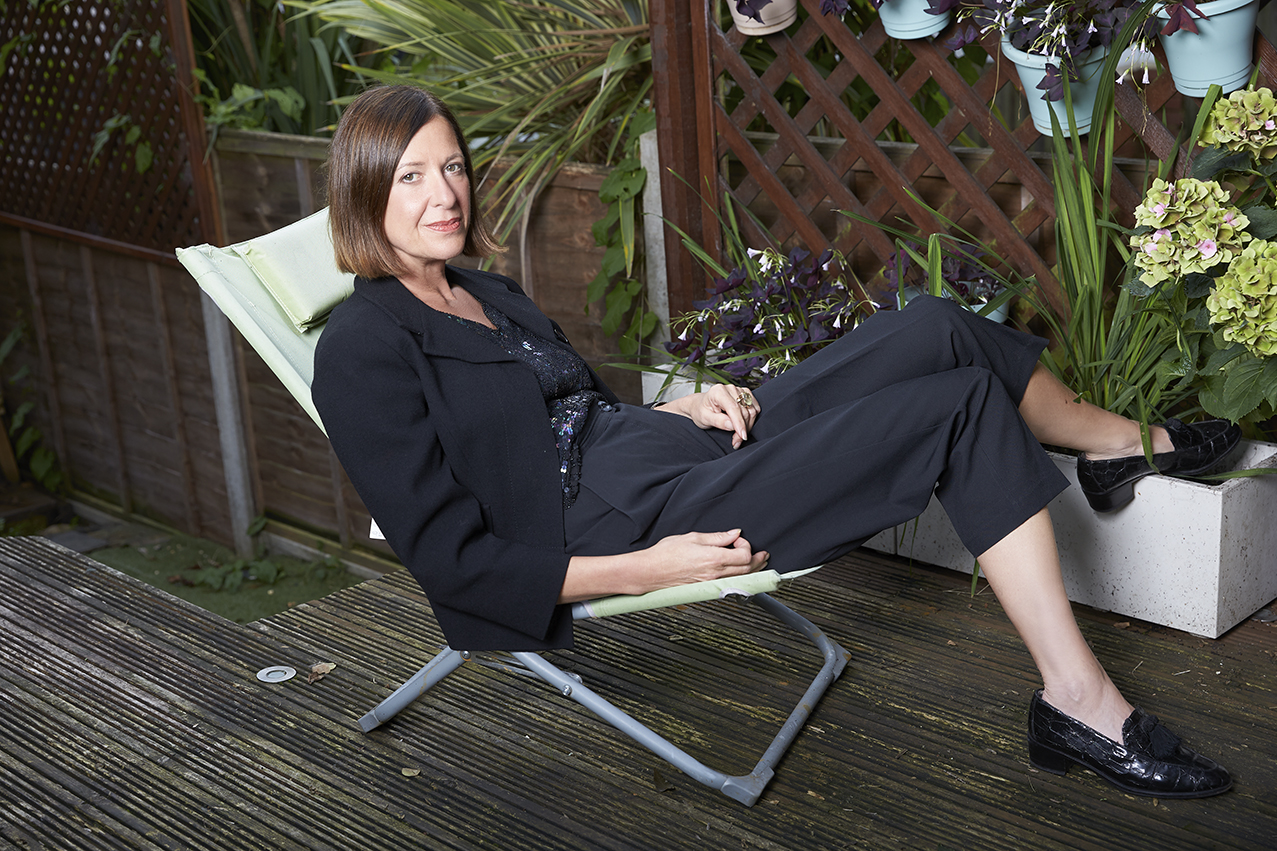
It was wonderful to head to the sea to photograph Sarah, to a place she has spent most of her life. Sarah is one of our original voices on Sustainable, Circular, Conscious fashion, a pioneer. Still working as a designer she also uses her extensive knowledge as a sustainable design expert, consultant, teacher, speaker and coach, seeing herself as a fashion futurist, she tells us that sustainability is the first step towards success, circularity the next. Here is her story.


D: Sarah where did you grow up and what were your early influences?
 
S: I grew up in Brighton. Mum was a fashion historian, and taught me from a young age to look at the history of fashion and look at circularity in fashion. She used to say that everything comes around again every seven years. I would say ‘but look mum I've got these amazing shoes’ and she would say ‘yes, I used to wear that style in the 40s’. I thought they were so radical, but no. She would say ‘There’s nothing new, but its a different interpretation, everything has its cycle roughly 7-10 years, it’s the nature of fashion to be circular ’ So, I was taught that everything is circular because of my mother’s knowledge of how fashion worked. She was a lecturer at Brighton College of Art, now Brighton University, and she taught the history of fashion and costume. Barbara (Hulanicki aka Biba) was one of her students. Mum and Dad became her friends and “Pauline and Peter” are mentioned in her book from A to Biba.
 
My best friend Tatiana’s mum Antonia and her brother Ru ran a boutique in the lanes called Topaz on Park Walk in Brighton in the late 60’s early 70’s, after school, when I was 4, we used to sit underneath the clothes and play and look at the people coming in and out. I remember in the 70’s the boutique sold bum bags made from ex-convict’s jeans, it’s my first memory of recycling. They were embroidered with stars, flowers and patches with messages of peace and love for the flower power generation. It was already happening then recycling clothes, it’s not a new concept. But every generation seems to think it's new because it's new to them! Myself included!! In the 70’s in Brighton, with Infinity Foods, Whole Earth Catalogue, Sussex University sit-ins, protest counterculture from the Beatniks to the Hippies all were a huge influence as I was growing up in Brighton.
 
Anita Roddick (The Body Shop Founder) was a massive inspiration to me, she started her first shop in Brighton. I remember walking past the shop when I was little, it smelt lovely from the street, she used recycled bottles and had re-fill stations in store for her products, which were all against animal testing and used natural plant-based ingredients without harmful chemicals. Reading her autobiography really inspired me, as a woman she was my major influence. Her and Barbara of course, whose first shop was also in Brighton. Reading Richard Branson's book was also inspiring, because he was very progressive and modern in his approach. They showed me how to be Go Ahead and Dynamic, let’s get on with it, be part of the solution, make it happen, like the slogan from Greenpeace, “think globally act locally”, that was my inspiration. It inspired me to think Yes!! Come on, Let’s do this, make a difference, be the change! 
 
D: Was this during your teenage years?
 
S: Yes, I was a teenager growing up in Brighton the home of counterculture. I thought everyone was going to be like this I didn’t know we were in our own Right On Bubble!

I moved to Bristol to study fashion and although it was a green cultural community, I missed Brighton so I only stayed for a year. During that year though I was nominated as student designer of the year for Fashion Weekly magazine. 

I moved back home to Brighton in the late 80’s and had a gap year. I volunteered part time at Oxfam, and worked in one of the shops, and found out what happened to the donations.
 
When they come in things that are of merchantable quality go out onto the shop floor, if after six weeks they haven't sold they go back to the warehouse, and then they will be sent to a big plant in Huddersfield called Oxfam Wastesavers, the clothes are then categorised.
 
There are a lot of vintage seekers, people looking for certain types of product. Vintage was and still is massive, so people are sorting and searching for certain things and the clothing is put into packs for different groups. Whatever is not good enough is made into something called ‘shoddy’. Shoddy is used as carpet underlay, or insulation and most people don't even know, that happens. I was passionate about all of this and wanted to do everything I could to change the world.

Daryl, a woman who lived on my street, ran a model agency called Circuit Models and through her I started modelling for local photographer Glen Luchford, and in London with Donna Trope, I seemed to be in the right place at the right time. Glenn (Luchford) said to me, ‘Sarah, show me your book’ as we chatted he asked ‘what do you really want to do?’ my reply was ‘I want to be a fashion designer.’ He encouraged me go for it ‘you’ve got to try you never know it might just work out’. Shortly after I finished college and stopped modelling, I got a job in fashion and I went to live in London. 


D: What year was this?
 
S: Around 88-89 during that whole rave summer of love thing. After moving to London I interned with Lisa Nelson PR agency in South Kensington we looked after a lot of fabulous fashion brands such as Dolce & Gabbana, Adolfo Dominguez, Charles Jourdan and Reebok trainers. I had to call round to all the fashion magazines and find out what they were working on and send things they may like to shoot for the magazines, booking appointments with stylists and handling the call ins and returns. Lisa gave me tickets to go to a Vivienne Westwood show which I loved. I sat next to a lady in a navy blue suit, she looked so smart, I said ‘Wow look at you in your blue suit. Are you from America?” Because I thought only Americans would do that, turn up to a Vivienne Westwood show wearing a suit! She replied, ‘no, I work at Options Magazine’, so I asked if she needed an intern and by luck she did.


They were based in Newman Passage at the time, near Soho. I loved working there, I got to meet and work behind the scenes as a stylist, to some incredible photographers like John Swannell, it was an absolute education in how the fashion industry worked, I loved it, creating these incredible beautiful images. I loved fashion photography and found it fascinating working in the magazine world creating looks to inspire people to have fun with how they dressed. It was a great time, Models One was just down the road and Storm Models Agency was in Covent Garden it was a great experience. While I was there, during one of my lunch breaks I saw a job advertised for a designer, for Sun & Sand.
 
That became my first job as a designer, with Sun & Sand, they had made their name in the 70’s it was a great job and meant I got to work in the South of France. They had their own small factory. During a trip to visit the factory I remember driving over a river which had a big sign that said ‘Polluted River’ so I asked, ‘what’s that all about’ they said ‘oh that's because of the fashion and textile industry, the dye mills up the road.’ Until that point, I had no idea the impact the business of fashion had on the environment. I was a member of Greenpeace and I had read about industrial pollution, but I didn’t realise that fashion was involved. I thought that there must be legislation to prevent that kind of thing. But there wasn’t until the mid 90’s, when they banned Azo dyes in Europe. 

When legislation started kicking in around this sort of thing companies moved the production to the Far East where there was no legislation to prevent chemical run off… Sadly we are still fighting to change this still, 30 years later! 

 My epiphany or pivotal moment was on that bridge in the South of France.

From that moment on I realised we all need to become more conscious. I was the first to put the word Conscious with Fashion an idea I developed with my first brand Conscious Earthwear. I purposely chose that name in that way.

D: When did you set up on your own?
 
S: I wanted to do something more, so I set up the brand with my boyfriend at the time and called it Conscious Earthwear and printed T shirts. We created loads of them, this was around the time of the rave scene; we created all the rave T shirts it was a really successful business. Honestly it was like printing money selling those T shirts. We were free you know, we thought we were gonna change the world. And we did in a way, we made it so people could dance all night. Before that they kicked you out of clubs at 2 o'clock in the morning. We fought the criminal justice bill. Saying you can't penalise us for wanting to dance, it’s a human right.
 
D: What were you making your T shirts from?
 
S: We were making them in a studio in Saint Albans called 21st State. We created T shirts for bands like The Grid, for Jazzy B from Soul II Soul and his Camden shop Soul II Soul, we were in on the dance scene in London at the time we were known as “The S/Chakras” because we were always talking about Consciousness and the Indian Chakra System. It was then that I started saying we should be making more really conscious clothing we should be making these out of organic cotton.
 
My partner at the time moved to California, I didn't want to go, I was from Brighton, what do I need to go to California for? I already know that kind of life. I have lived by the sea in a progressive city. I also felt that London, as one of the top capital cities of the world, is an important place to be, it’s a window on the world. That what you do here and what you create can make a big difference. If I went to California I would become just some groupie hippy, so I stayed. As a feminist I felt I should follow my own path and do what I was gifted to do, which was to make Conscious Fashion, fashionable. 
 
I started searching for organic cotton and eco-friendly fabrics to make clothes from. I researched at The British Cotton Council and at the London College of Fashion Library. I discovered some organic cotton from India and I made my first collection “One World Tribe Vibe”, it was heavily inspired by the work of Keith Haring, environmental Artist Richard Long and Andy Goldsworthy. Then for the subsequent collection “Touch the Earth” I used organic cotton cheesecloth and literally hand printed the cloth with my handprint, I had just completed a course in Yoruba Tribe natural dyeing and used my new found skill set in the collection. The collection was featured in The Face magazine and I did my first runway show at a warehouse in Camden Lock. The next collection was based on Celtic culture and was a winter collection featuring knitwear made from recycled post-consumer waste which I picked from Oxfam Wastesavers.
 
It was there that I discovered that because this is the British Isles tonnes of knitwear is sent to Oxfam, a lot of cable knit sweaters. There had been a big trend for cable knit sweaters in the 80’s because bands like Haircut 100 had been wearing big Arran sweaters. With time of course they all were chucked out.


D: Did you unpick the wool and remake?
 
S: I undid the side seams and turned it into a fabric, then I draped it on the stand to see what we could do with it. Because of my fashion background I was thinking what can I do? I made coats and dresses out of them, that was my first winter collection.
 
Luck was on my side when I went to see the woman who ran a trade show called Inter-Season, at Olympia in Kensington. I asked if I could have a stand and she sponsored me which gave me a window on the world. I got £26,000 of orders from this first show, back in the 90s that was a lot of money. I recycled the packing paper from the fixtures and fittings and put it on the walls I showed a recycled Denim knit and organic cotton collection and collaborated with a friend to make jewellery. 
 
It was an interesting time because there was a movement in this direction, Margiela in Paris was creating garments out of old stuff, Yamamoto also was working that way, it was a big movement that isn’t really talked about that much.
 
To build the brand we had pop-up shops before pop-up was a thing. I worked with Alternative Arts and we had an incredible shop behind Carnaby St, it was amazing. There were a few of us working this way at the time Kate Hills and Joe from Vexed Generation, Grahame from Kilogramme Patchworks and Sister T. Bjork came to the store and fashion stylists Andy Blake bought the pieces for music artists, it was great being there right bang in the middle of London with a statement. We sold the collection to Brown’s as a result of that.
 
D: The brand became known as Ciel from 2004. Ciel is a beautiful name, what does it mean?
 
S: It means Heaven. Sky or the Heavens in French. Ciel was a different brand, more feminine in feel less urban. I was trying to find a name that would be like Conscious because conscious was always keeping me on track, it a reminded not to deviate, even if you find yourself attracted to shiny things, but if it’s not Green you can't use it. Which makes necessity the mother of invention.

I worked with the Soil Association so that I could change the story there and helped work on the GOTS Global Organic Textile Standard, where I brought the designers view, because at the time they only had food labelling and together we changed some of the wording to create the more coherent inclusive standard that we have today. I also worked with PAN Pesticide Action Network, we created a campaign about Bee’s, before the importance of their welfare was known about. I worked with EJF (Environmental Justice Foundation) designing T-Shirts for fundraising for Staro, the Save The Amazon Rainforest Organisation and with the proceeds bought land to save which was later given over to Prince Charles and the Green Frog Save the Rainforest Campaign. I worked as Co-founder and Chair of the Ethical Fashion Forum, (now known as the Common Objective or CO), with Judith Condor-Vidal, Carrie Sommers, Tamsin Lejeune and Allana MacAspurn amongst others. 
 
Ciel - Conscious International Earthwear Limited. It’s a name that was meaningful, it was blue sky thinking, optimistic it was short and was near the top of the alphabet.
 
I made some samples, I got an agent and she got us into Vogue, and it sort of happened from there.
 
The problem we have in this country is that we take people who are very small niche brands, we put them under hot house lights, make them grow and blossom and then they crash and burn, this is the trouble with UK independent designer fashion. We are always looking at the new, new, new, new, new and that causes its own problems.


D: What was your favourite collection?
 
S: I loved working with alpaca, the knitwear, that was such a joy. I worked with lovely people in Peru. They were so nice they had 52 colours, all natural that was exciting. I loved going to Peru and sourcing and learning the story of textiles there. At one point in Peru, textiles were worth more than gold. Historically the Spanish invader Cortez devastated the people, when he said ‘take me to your most precious thing’ they took him to their temple and the most precious thing they had, in their eyes was a textile. It was a beautiful wall hanging. He was furious because he wanted gold, he burnt the whole place to the ground and killed them all.
 
I have a lot of respect for Peruvians, because when I went to their factories they had rights to association everywhere, fair labour everywhere. The right to association means the people were able to form trade unions, they had a voice, they don’t have that in some countries even in America some rights to unions were suppressed in some states.
 
D: That's what Fashion Revolution are did with their ‘Who Made My Clothes’ campaign isn't it.
 
S: Yes!! Thank goodness there are fashion people like Carrie Somers and Orsola de Castro who are awake to try to change the story and make a difference. Carrie created one of the first Fair Trade fashion standards with her work with
Pachacuti the Panama hats such an inspiration to us all.
 
I loved working in Peru. I loved working with the knitwear, it was a joy to work with the knitters. It was very soulful, you went to their house you saw them knitting it was lovely. It was really wonderful because it was making a difference and in a very cool way and making great product design. When Jane Shepherdson was at Whistles I created a really nice knitwear collection with them, where we collaborated together with the Peruvian knitters.


Then there was a collaboration with Liberties using their deadstock, that was a lovely, lovely collaboration because I got to look at all the archive and see the most fantastic fabrics. This was before using up deadstock became a thing.
 
Fashion is always going to exist. My whole ethos when I first started in the 90’s was to make it fashionable to be green. That was my one of my core philosophies.
 
D: That still holds true now, you can have beautiful clothing which is made well ethically and environmentally.
 
S: What I'm wearing right now is a John Smedley collaboration, made from organic cotton, made in Portugal and it’s beautiful. I also found a brand on Instagram, which is a very popular called, Never Fully Dressed they make mostly in the UK and that's great. At least they are doing their bit, ‘not everyone can do everything, but everyone can do something’. I created T shirts that says that, for a pop-up shop I did with Eco-Age. It was a quote from the lovely gardener Monty Don. I took it to our pop-up launch at Ecoage and Livia (Firth) bought all of them, and her team wore them at the launch of her film In Prison My Whole Life. That was a great moment. They were all organic cotton, long sleeves with this quote; ‘No one can do everything, but everyone can do something’ and that's so true.
 
D: Are you still creating your T shirts through Conscious Earthwear?
 
S: Yes, I've just become an ambassador for tree planting which has led to me to creating a Re-Wild Me new collection of sweatshirts and tees with pressed wildflowers they are beautiful I’ve called them Save Me! I print with Rapanui who are completely circular, printing is on demand and they work in a solar powered factory with organic cotton and print on the Isle of Wight, even their packaging is from recycled materials. Then at the end of the life of the T shirt they will take it back and will recycle it and make it into new yarn and new product. So truly completely circular which I am so happy about. We, get a royalty for the charity to plant trees and I don't have to worry about any of the production as I know it’s origin and ethics. This is what I call smart collaboration.
 
Ciel is an interiors brand now and I am making inroads into that industry, because they don't talk about being sustainable at all, and they need to. I went on a course on hotel interior design, and they brought out all these swatch’s and they were made out of vinyl. I was like PVC? Really? Wow are we in the dark ages, then they tried to side line me and push me away, because they didn't know my background. I'm not in their industry and what I’ve done means nothing to them. During a course I was on, I was the one at the back asking awkward questions, interestingly now though they're talking about it, and Heals are now doing sustainable furniture, but where is the certification for furniture and interiors? It’s been interesting infiltrating that world for the last 10 years and changing that conversation too.
 
The great thing about interiors is that it’s slower and I can sell the same things all the time, because if you choose something that's really beautiful and stylish then it's not going to go out of style. When you buy a new sofa, you're going to have it for 10, 20, 50 years and more.
 
D: Yes, our dining table and chairs are from the 1950’s which we inherited when we moved into our last house.
 
S: Interiors are a lot slower, you can change things by having different cushion covers. Say I got pink velvet cushion covers but in the summer I might want to change them and I could easily put green on there and it still looks good or I could put yellow, and make it feel warm. Textiles in the home can give you a new look and feel and they last.
 

D: How do you see the future?
 
S: I think we have to be hopeful. That's one of the most important messages to get out there.
 
Change is coming, and circularity is coming, and the main thing is that production has to slow down. We must slow down the cycle then people can have the time to switch their factories and update them. It takes time, it takes money, and it takes investment. Most fashion brands don't own their own factories, that's a problem, they used to, but not anymore. Also, this constant quest for new new new and everything to be cheap has to stop.
 
Recently I did a teaching course, lots of people write to me and ask if I can come and talk at their college. This made me want to know more about teaching. So, I've been updating my skill base and learning how to present.
 
I have also started thinking, how can I be a voice for positivity, looking at solutions, looking at how we can change this story. What we focus on is what becomes bigger, when we collectively focus on s**t then guess what……. that’s what we get, that's what consciousness means, the broadening of humanity in the mind, and it's really important that we plant seeds of hope and find solutions.
 
Cindi Rhoades set up a company called Worn Again Technologies, looking at the bigger picture, where they can split recycled fabrication into different modules. That's the future, that is what we are going towards this is real circularity, then people won't burn collections.
 
I have seen so many children with climate depression, it’s a thing. It's unfair that they should be feeling this way when they should be enjoying their childhood and not worrying about this. So, I felt that I needed to be positive and didn’t know how to do it, so started by going back to college.
 
What I've discovered about teaching is that young people already know a lot, it's not like you're turning up and telling them some brand new story, they are part of the fabric of society just like anyone else.
My starting point is OK we already know about these things, so where are the gaps? One interesting thing is that using organic cotton, reduces the water needed for its production, the why of this is not talked about enough. They don't tell you why.
People can be self-sacrificing, I'm such a good person, I'm eating organic but again, same thing they don’t tell you why. Why are you doing that? There are lots of missing links that would make all this communication so simple for children because it is simple.
 
As far as fashion is concerned people are like peacocks it is in our DNA, you can't take that away from us, people are always gonna want to shine.
 
The whole point of circular design is that it starts at the design stage because it needs to be built in at that point. Educating designers with this in mind is really important.


D: In the past products were created to be repaired, then they started creating things to fail and a lot of products in our homes are built that way at the moment, but I am pleased to say that is beginning to change again.
 
S: I remember learning about that when I was a child, built in obsolescence and that’s a problem because things are built to only last for a short time. Orsola says “loved things last” and I think that’s true if you invest in something then you want to keep it, repair it fix it, share it. In the fashion world we must work with what already exists, but people are voraciously eating clothing like it’s going out of fashion, we need systems in place to make garments circular.
 
D: Some people say that the fashion industry can pivot quickly. Designers can but the industry around them is much slower. It’s time to build the economy differently now.
 
S: Investment is the key thing. Who's investing in the Plant (machinery)? For me the biggest change that has to happen is investment in Plant. Make filters for the factories, its simple make filters and filter the effluent. There was a Danish company who did this, they put filtration systems in their factories, and used the effluent to heat the factory. They were so clever; they were ahead of the curve as this was happening in the 90s. This should be happening everywhere by now.
 
If we could get investment in Plant to create change in factories where it's needed and make sure that factories comply, and that the big companies who are placing orders with them also give grants to the companies to enable the update. They need to tie a proportion of their profits to these companies. There should be modern philanthropy.
 
Cheap clothing means somebody somewhere is not being paid and that usually means it’s the workers. There are slave labour camps in China which is also linked to ethnic cleansing all for production for the West. The UK has one of the biggest fashion footprints and we are tiny. Why do we need all this stuff?
 
It's time to fix, the big problem, and the big problem is, that people don't feel validated. This whole cult of new, the cult of trend, it’s time to switch the language we use. We need to think about our style. What style are we? Not what trend. A daffodil is always going to be a daffodil.
 
The right words create change, how we talk about this is one of the biggest changes we can make. It’s simple and effective, if we help people with positive language then they can change the story themselves. It can be self-directed, when they have the right information.


Links


Instagram: Conscious Earthwear


LinkedIn: Sarah Ratty FRSA


Consultancy: Sarah Ciel


Tuesday, 24 May 2022

Focus On Maria Chenoweth - CEO TRAID


Maria is the very stylish CEO of the fantastic charity TRAID and has spent most of her working life in the charity sector. TRAID work to save clothing from landfill and in doing so use the funds they make from their brilliant shops for international projects that improve conditions and working practices in the textile industry. If you live or work in London and are serious about fashion circularity you really must check them out and with different stock in different shops you have a very good reason to visit them all. They will even come and pick up your donations from you so you know they are going to a place where they will do the most good.


Read on to learn more about the work Maria and her team are involved in.


D: Normally I start the conversation by asking where you grew up, but today I would like to know how TRAID has faired over the past few years. The charity sector was hit really hard by the pandemic and you have 12 shops in London.


M: For the charity retail sector, the pandemic had a negative financial impact. Like other retailers, we had rents to pay on shops that had to remain shut. At the start of the first lockdown, TRAID staff were in disbelief when told on a Saturday evening, that shops would be shut once again on the Monday morning. There was also a sense of injustice within the sector, as some big commercial clothing brands were able to continue selling clothes alongside groceries.


Fortunately, during the pandemic, TRAID managed to continue funding its international projects that focus on the textile supply chain.


And, the level of custom when TRAID shops reopened was amazing. We never imagined that we would bounce back to the magnitude that we have.


At its heart, TRAID is bricks and mortar. People love our shops and we love being on the high street. The pandemic accelerated new retail habits such as online shopping, and along with this, the closure of department stores and deliveries galore. However, the high street is such an important part of the community and society, and it really shouldn’t be lost.


My own consumer habits have reverted back to how they were pre-pandemic; I walk my groceries home, and I physically go and buy my clothes and goods from charity shops. I love people, interaction and community.


D: You said you were able to keep your projects going. I was wondering had there been an impact at all and on the projects in Africa, Bangladesh, India.


M: We kept our projects going by using our reserves to continue funding. With the organic cotton projects, due to COVID-19, the farmers couldn't get together as usual at Farmer Field Schools, which are really important for sharing knowledge about pesticide free crop management. Luckily, our projects in Benin and Ethiopia were not hit as hard as others by the pandemic, and the local teams managed to continue working with farmers socially distanced to ensure training continued.


In contrast, the children's centres in Bangladesh had to shut and TRAID funding was diverted to feed garment working families who had lost work due to factory closures. At the same time, most big fashion brands refused to honour payment for orders already made.  This meant factories and suppliers couldn’t pay garment workers, who in many cases were unable even to buy food. For the first time ever, TRAID had to stop funding our ongoing projects and divert money to feed people. This again highlights how fragile clothes supply and production systems are, and how closely garment workers exist to desititution.


D: I really love the work that you’re doing developing cotton seeds, how is it coming along?


M: We have three organic cotton projects in India, Benin and Ethiopia. The project in India in partnership with Fairtrade Foundation is focused on developing and increasing the supply of non-GM cotton seeds for farmers to grow organically.  The monopoly of agro-chemical companies like Bayer – which has 95% of the Indian seed market, meaning it is extremely difficult for farmers to source non-GM seeds. TRAID funds are providing around 1,500 farmers with access to organic seeds grown by their own co-operative and they are now selling them. The seeds are bred to be pest resistant, drought tolerant and to grow easy to harvest plants.


The co-operative this project supports now produces approximately 20% of the world’s organic cotton, and our work to increase access to non-GM seeds is pushing back against chemical pesticides for an organic future.


The whole process is science at its best. Creating hybrid seeds which are suited to local conditions to grow the best cotton is complex and risky but it’s exciting and is a project with a lot of passion and love thrown into it.


TRAID funds other partners with huge expertise including Pesticide Action Network (PAN UK) who are an incredible organisation that do so much with so little. We have funded PAN UK for over 11 years commiting over £1.8 million to its work improving the lives, incomes, health and environment of cotton farmers by reducing and eliminating hazardous pesticide use. TRAID funds projects often for the long-term, and from our years of experience, we know what works.


D: Tell us about the benefits of this type of crop.


M: The organic cotton projects TRAID supports are all about reducing risks for farmers. Alongside their organic cotton harvest, farmers also grow rotation crops and intercrop to improve food security and sell produce locally. If something goes wrong, because things can go wrong, like say it rains at the wrong time which going forward will become more frequent due to climate change, it means a farmer’s whole livelihood isn't going to disappear overnight because they aren’t depending on one crop. Intercropping is also really good for nature and encourages biodiversity. Your soil isn’t eroded, it's a healthier life.


It's a harder way to start off your cotton crop. However, once you’re over the hurdles of starting an organic crop, TRAID’s projects with PAN UK are proving that the amount of cotton produced can be much higher with farmers securing higher yields and more income due to the organic premium and spending less on inputs like pesticides and fertilisers.


D: The soil being very important because the topsoil is very fragile now. It also takes a lot less water to produce fabric from organic cotton.


M: Sadly though, less than 1% of all cotton produced globally is organic. Now, there is a huge demand for it but the retailers are so late. It takes time to convert your crop to organic, and the conversion process is slow because of the certification process. Many farmers are already growing organic cotton but they're not certified yet because it takes three years for that to happen.


Retailers want stuff overnight and they don't realise: (a) you’ve got to pay for it and (b) it's a slow, beautiful process.


D: Yet here you are as a charity funding what they should be doing.


M: TRAID funds 2% of the world's organic cotton currently being produced, which is ridiculous because we are a relatively small charity based in London. Compare us to huge high street and global brands and imagine how much more those clothing brands could do and could’ve done by now.


D: Can you tell us about the educational projects that you work on both in India and here in the UK as we should be educating our kids where our clothing actually comes from.


M: Most charities will have an educational objective. About 17 years ago, we set up a school programme working with local authorities, going into schools because the environment was on the curriculum, and recycling was way up the agenda. Due to the pandemic, TRAID stopped going into schools, however we have since restarted working with local authorites delivering repair workshops. TRAID also has an educational toolkit that's free for teachers to download.


D: In India one project you have is speaking to communities to discourage them from sending girls into bonded labour.


M: We have worked with READ since 2010 to address the bonded labour of young girls in spinning mills in South India and end the use of an exploitative scheme called Sumangali Thittam, which means “marriage plans”. It lured thousands of girls from poor rural communities into the garment industry with the promise of earning a marriage dowry in exchange for a three-year apprenticeship. The majority of these workers also lived in spinning mills making them extremely vulnerable to appalling treatment, and rarely got the promised lump sum payment. Women and girls have even been given pills to stop their periods so they could continue working non-stop.


READ works at every level – from the grassroots to government level – to raise awareness in local communities of exactly what happens in local spinning mills to encourage people not to send their daughters there and it’s been incredibly successful. The scheme once so rife, is almost never used now. In the current phase of the project, READ is directing its energies to address the rights of badly exploitated inter-state migrant garment workers in spinning mills and garment factories.


D: I'm going to step back to your own childhood what were your inspirations and where did you grow up?

M: I grew up in the West country, I was born in Bristol - a beautiful community, streets where you knew your neighbours and terraced houses. Very strong women lived on those streets. It was good.

Later we moved to Clevedon, a seaside town where nothing really happened. Because there were no clothes shops, the only really exciting thing we could do was to go to jumble sales on Saturday mornings. It meant I found beauty and fun in really small things, patterns, designs, materials and dressing up.


With this slow pace of life when not much happened, you would sit by the sea and wait for the fair to arrive, once a year, or you would have the time to make things. We used to make 80’s v-back tops out of pillow cases. There were charity shops, and so I got into secondhand clothes. I helped at the school jumble sale when I was about 11 or 12 and fell in love with this nostalgia. The quality of clothing from the 1950’s, you could dress up and be whatever you wanted to be. That's where it all started and I was totally hooked. It meant I could live a dream of being whoever I wanted to be. My Mother banned me from going to jumble sales because I had so much stuff, but I used to sneak it in through my bedroom window - luckily we lived in a bungalow.

The highlight of my youth was getting dressed up in secondhand clothes and getting a bus to Bristol to go out dancing.


D: Do you have brothers or sisters?


M: I have a brother who is older, which meant he left home when I was very young. He's a very humorous character, which I like. I think people from the West country are quite humorous.


D: Does he still live there?


M: He does. I love the accent there and I love the people. My eldest son wants to study in Bristol which is exciting as it brings us full circle.


D: Did you go to university?


M: No, I left school at 15 with no qualifications, and went straight into being a nurse. However in my 50s I completed an MBA. I'm so grateful to the Open University because through their open door policy, they allowed me to do a Masters knowing that I had no previous educational qualifications, and I have been lucky enough to become a Fellow.

What I learnt from my MBA, was how most business models were based on growth and profit over everything, and were written by men. Initially I wanted to learn the language of  business, so I could also talk the talk, but in hindsight, it’s a mechanism for bullshitting and keeping people out of much-needed conversations. My career path from volunteering in an Oxfam shop to CEO of TRAID is not a conventional one. Probably from my studies I learned that I'm not as thick as I thought I was.


D: How did you end up working in the not for profit sector ?


M: I moved to London when I was 20, and in those days, you walked along Oxford Street, saw a vacancy sign in a shop window and got a job. I was lucky and moved onto management positions. One day I questioned what I was doing and started volunteering at my local charity shop, and the rest is history. It’s now my 30th year in charity retail. I have worked at TRAID for 23 years and became CEO in 2003.


D: TRAID really stands out on the High Street. You talk about your stores being very important and they are so colourful and exciting, brilliantly curated and some are big. The only time I ever remember being in a store like yours was in Denver in America where they had big, big second-hand stores. What inspires your shops?


M: When I started at TRAID, charity retail was downsizing and boutiquing their shops. My thought was, well if you're paying nearly the same amount of money for staff and everything else for a small shop, just have a big shop. Then I had this fantasy of a big supermarket type charity shop where everybody was welcome, everyone would find something, and it wasn't rejecting or excluding anyone.


There are only seven senior managers at TRAID, and when people come into the head office, they expect to see departments of people. Everything we do is quite organic with most management promoted from within.


D: Your shops are only in London, any thoughts of pushing them further out?


M: We have fans globally, but there is always so much to do in London with consumption and waste.


D: Do you have a special place for any high end finds you come across?


M: Our shops stock differing products depending on the location. Westbourne Grove sells the high end, Wood Green sells a lower end label, it’s not because we're being geographical snobs, it’s purely because we try out different types of stock and react to our customer preferences.


D: What are your views on how we bring about change?


M: The view is the bigger picture, it's not about blaming and shaming the consumer, it’s about businesses and their behaviour. It’s about using up the earth’s resources, systemic change with business models, profit and wealth distribution. The fashion industry is the fourth biggest textile waste polluter in Europe. All business models are built on growth, growth, growth, growth, growth and cutting costs to the detriment of all things living. We need to redefine what it is for a business to be satisfied, we need to redefine business full stop.


D: Politically we had the Environmental Audit Committee report which we all held high hopes for which was totally dismissed.


M: All the EAC suggestions were rejected by the government and they again exposed the sweatshops in Leicester. It was so obvious that it was just a matter of time before the UK would have its own sweatshops, because of the desired high turn-around of fashion.


D: What would you like to see in the next eight years as we only have eight years before the 2030 climate goals are supposed to be reached.


M: The start of dismantling current business models.


Links


TRAID


TRAID shops


TRAID donations


TRAID projects


Volunteer 


Thursday, 14 April 2022

Focus on Claire Bergkamp - COO of Textile Exchange


Claire Bergkamp is the COO of Textile Exchange who are a global non-profit who drive positive impact on climate change across the fashion and textile industry. She has had an amazing career path to what is a relatively new role for her at Textile Exchange, via film and TV in LA and her various sustainability roles during her time with Stella McCartney. Her work has gained her a unique insight and deep understanding of the fashion industry. She has been on the cutting edge of new fabric developments and now in a way her journey has brought her back to the foundations of everything, the earth. 


D: You grew up in Montana a beautiful big sky state which means you were immersed in nature from a very early age.


C: I was. My parents are not from Montana, they both moved there. My mom is from Arkansas and my dad is from Kansas, they met in Oregon and moved up to Montana. They moved there because they loved nature and were thinking about settling down it is really special for folks like them. I spent a huge amount of time in nature as a child as both my parents are avid hikers and backpackers and love being in the woods. There were lots of hiking tops up mountains, carrying little packs, and sleeping under the stars. Montana is special for that, it is pretty unpopulated and there is still a lot of untamed nature. You learn how to hide food from bears as a kid growing up in Montana that’s normal.


D: Did you have early influences as far as fashion was concerned?


C: No, not really, outside of the fact that I was always drawn to it, I don't think there was anything specific. Vogue I guess would have been my early influence. There wasn't really fashion in Montana, we didn't even have a Gap or anything in town. I think we had JC Pennies which is far from fashion. It’s one of those things–you get drawn to what you're drawn to, and I was always drawn to it. I used to play soccer and whenever we travelled around, I would always go to the malls in whatever city we were in and shop for more exciting things than you could get in Montana, where there was nothing.


D: Did you have big thrift stores?


C: We did, and I always thrifted growing up. A lot of what I wore was thrift store stuff, but you would only get the remnants of the population of Montana, so still not very

fashion-forward, but you did find some wonderful old things. I still have some vintage blazers from the 40s which are beautiful. You could find some incredible vintage pieces in the antique stores, but in all fairness, they were more expensive than I could afford as a teenager. When I was at college I really enjoyed coming back to Montana and being able to dip into that. I don't see it that much anymore, I think it was limited stock and has been moved out of the stores by now.


D: Hopefully those who saw it’s worth and snapped it up and kept it and it hasn't ended up in landfill. Did you study in Boston?


C: Yes, I studied costume design, not fashion. I was always interested in fashion as a young person. My mother is an artist, so I was always surrounded by the arts world. I did a couple of summer courses at the Chicago Art Institute when I was in high school. One of them was a fashion design course and I realized while doing it, that I didn't want to be a fashion designer. The design that I liked was more historical, more based on problem-solving than trying to come up with a new trend. That lead to my interest in costume design and the psychology behind clothing. I was fascinated by the history of clothing too, it really tells you a lot.


D: Did you work in film and theatre in Boston?


C: It was a required part of my degree. I love the theatre but the costume design I was more interested in was film-based, more subtle, I guess. Theatre is beautiful, but you have to be very bold with what you're wearing, it has to translate to the back row. I was more interested in subtle design which is more applicable to film.


D: That took you to LA which saw you working on programs like Heroes and Glee.


C: Different life, very different life. I worked on Heroes for a long time.


D: I loved Heroes. What was it like working on that?


C: My whole journey through film was interesting. It was so exciting at the beginning and so exhausting by the end. I worked in LA for about three and a half years, and I worked on Heroes for almost all of that. It was a dream to work on films and TV shows and be on set, it was extremely exciting to see how it all happened and to understand what it takes to create a show like that, with all the special effects.


How that translates into clothing means buying many multiples of anything so that when someone’s arm gets blown off, they can change 10 more times and have some for reshoots. That’s what my job became, trying to find 30 of the exact same black Theory T-shirts in the malls of Los Angeles.


I started on set, which was interesting, but the hours on set are pretty brutal, so I switched over to being more of a shopper, which still means very long hours but a little less. On set you would be working 14-hour days (12 hours minimum). I've never understood how people do it forever. In my 20s it was easy, but it would be very hard to keep that kind of lifestyle up long term.


D: When I was a photography assistant, we used to work like that on trips, photographing from morning to night with maybe a break in the afternoon but we didn't have unions like the film industry. As the assistant, I would try and sort everything so that at the end of the trip we could have a day off but that never happened, re-shoots ended up in that space.


C: We did have unions in LA and negotiated rates. I made very good money for someone in their 20s but worked very long hours. I was very grateful for the union and in one respect it was the best health insurance of my life. I will never have insurance like that again, it was spectacular.


D: If only all unions had that much power. Your next step was your move to the UK.


C:  That was for my master’s. I don't remember exactly the moment I realized that sustainable fashion was a thing. It most likely started with my love of vintage and thinking about second-hand but not really understanding why. I think that reuse and upcycling is always the entry point into the larger topic of sustainability, because you see excess. For me, in film, I saw so much excess. They're buying so much, and you're seeing everyone else buying so much, you spend all day in the mall buying. Consuming at a rate that no normal human could because it is your job.


When my interest started in sustainability, I looked around at courses and found the course at the London College of Fashion. It was very unique at the time, I think there are more now, but there was nothing like it in the US, or anywhere else that I saw. I eventually did a more business program, but I still did all my work through the Centre for Sustainable Fashion with Dilys (Williams). The best thing I ever did was moving here and getting to meet Dilys. She really did change the course of my life in a big way. She's inspired a lot of people being in that role.


D: Did you go and work with Stella straight after that course?


C: During my master’s I worked at Arcadia, which was interesting and I realized quickly that it wasn't the part of the fashion industry that I wanted to be in. I started at Stella pretty much immediately after I finished my master’s. I started as a temp to work on the end-of-year environmental impact report, the reporting that most companies do and we reported to the Kering Group as we were still a member then. At the same time, Kering decided that it wanted to have a sustainability department and was really encouraging brands to hire people. So for me, it was the right place, the right time, the right skills. It was still a pretty niche thing that I had done, it’s way more competitive now. Hiring others and bringing in team members got so much easier, but it was so niche when I started that nobody wanted to talk about it at all.


D: Your mandate was to make the company more efficient and green.


C: Broadly yes, that was the idea. At the beginning a lot of it was getting to know the supply chain a lot better, looking at where the risks were, not only environmental but human rights too. For the first couple of years I did both, by myself, only me, so way too much. Looking back, when I did my indefinite Leave to Remain to stay in the UK, you have to tell them everywhere you've ever been, which is insane if you have a job where you travel. In the first two years, I was gone so much more than I was here. I think I spent two months in Asia at one point, I don't remember that. My time had been spent between India and China and a huge amount of time in Italy. Over the years I hired people to help so I didn't have to do it all by myself, which was a lot better.


D: That must have been a huge education, to see how everything works and how people were treated.


C: It was and I'm so grateful that I had to do it all myself because I saw it all first-hand. Drom embroidery in India, to big factories in China, to high quality luxury mills in Italy, to farms, I've seen a lot of what any global fashion supply chain has to offer. I was also at an age where it was fun. I think now, in my late 30s it would be a lot harder, but I was 27 and it was exciting to see it all. It was a real education into what it actually looks like to make fashion.


D: You worked on the EPNL (Environmental Profit and Loss) system with Kering. Do you think that that and all the travel you did has set you in the direction you have taken now?


C: I think the EPNL had quite a big role in that because I was very involved in helping to develop it with Kering. Many of the brands were, but with Stella, obviously it was very important to us. What it showed, because of the types of materials we used in luxury, is that the raw material part of the supply chain has the largest impact. Where a lot of the focus went for me, for the team, and for the brand, was on raw material production and sourcing.


The travel that accompanied that was visiting farms and spending a lot of time on wool farms and really getting to understand that part of the supply chain, where those impacts were, and what they looked like in reality. It was the part that spoke most to me also, I think that comes back to my connection with nature. When you're on a farm you are in nature, and you can see how that farm is acting in nature. I grew up around that too, I grew up around ranches, they were mostly cattle in Montana, but there were quite a few sheep ranches too. It made a lot of sense to me, the impact was very tangible in a way that I can personally understand and engage with. When you're in a dyehouse you can see water pollution and you can also see water treatment, but the technical differences between water filtrations is not my strength. I'm not the person that can tell you if that chemical mix is good or bad. For me, raw materials has always been the part that I understood. That is what drove me to Textile Exchange, because that's what we work on.


D: When did Stella stop using cashmere?


C: When we started doing the EPNL report, cashmere had such an outsized impact for the amount we used. As we were being very serious about trying to reduce impact, the easiest solution was to stop using virgin cashmere and switch to recycled, so we didn't source virgin cashmere after 2016/2017. Cashmere has an impact on the degeneration of grasslands. We did a lot of work in Argentina and we walked away from it because of some animal welfare concerns. But a group of Argentinian farmers was doing incredible restoration work on grasslands through holistic grazing.


Huge swathes of the grasslands in Argentina have been turned into desert because of overgrazing cattle. It's a very different ecosystem, very similar to Montana in climate, very brittle, very dry, not lush at all – I think parts of Mongolia are still quite lush. Overgrazing with goats happens a lot quicker than it does with sheep.


D: Through your work you've managed to work with a lot of innovative fabrics. Which one fascinated you most?


C: The partnership we had with Bolt Threads at Stella was the first major one and the promise of spider silk still holds very dear to my heart. I know there has been a lot more focus on mycelium, but spider silk with Bolt was my entry point to the whole topic and for me is still one of the most exciting. However, the unsung hero of material innovation is textile-to-textile recycling. I also worked with an organization called Evrnu, which is pretty incredible too.


I think like anything in life, and this is something I think we really undervalue when we talk about this idea of sustainability, is human connection. All that change we made in the supply chain was from getting to know the people in the supply chain. It’s not like there is this hard science, it's about transformation and changing people's minds, getting to know them, and understanding the reality. With the innovators, it's the same thing. The people that I had the most connection with personally also tended to result in the best results for us as a company because we could work together. The technologies are often very similar but having that working relationship really unlocked getting it to the next level. You're going to run into so many problems – every day is a problem when you're trying to bring in a new material or innovation to supply chains that have been working one way for hundreds of years. So much of that was because of the people running those companies.


D: I guess you found yourself working with sci-fi a little bit again with these technologies.


C: I love it, it's interesting. But I think because of the state the world is in we need to be careful not to let innovation distract us. We have a lot of work that needs to happen and within that, it should still be invested in. But some of the investment does need to be on the big problems we have right now. I think it's easy to get excited, I did and still do, with some of the innovations out there, but none of them are at scale and we have very little time to address some very big problems. So focusing on the solutions that can scale up quickly and that already exist, for things like soil health, has got to be where a lot of the focus is now.


D: Tell us about Textile Exchange, what they do and what you are doing with them? Can you also explain the tier system?


C: Textile Exchange exists in what we call Tier Four. If we think of a supply chain in tiers, Tier Zero is where a company operates itself, its stores, and its offices. Tier One is garment manufacturing, Tier Two is fabric mills, Tier Three is the transformation of raw materials into fibers through processes like the scouring of wool and the creation of pellets, and Tier Four is where the actual creation of the material occurs – where the sheep live, where the cotton farming happens, where oil extraction is, mining for metals, whatever the material is. Where the actual, on-the-ground impact is happening is in Tier Four.


D: Does Textile Exchange also do certification?


C: We do. We are a non-profit, not a membership association, but we do have over 700 members made up of most of the brands you have ever heard of, but also farmers and suppliers. That's one part of our world that brings members along on the journey, trying to encourage transformation inside companies. We are also a standards holder and certification organization. We don't certify farms, but we developed the standards that are then applied, or asked of farmers or the supply chain to adhere to.


We hold standards covering both animal welfare and sustainability for wool, alpaca, mohair, and down. Then we have an organic cotton certification, which does not certify the farm –that's a separate thing that is important to acknowledge. Our most used standard is our Global Recycling Standard, which is pretty much the main certification out there ensuring that something is recycled, and we do see that as a very important part of transforming the industry.

Certifications result in impact change on the ground, which is important, but they also provide a chain of custody to the finished product. It is a way to verify a claim that is being made. There are all kinds of claims made in this world, but certifications are real, in a way that a lot of stuff isn’t, and we believe they are an important part of helping the industry transform. We also run a big benchmarking effort which is the largest peer-to-peer benchmarking effort in the industry, where companies voluntarily report to us the use of their materials.


The report for 2020 had 191 brands that reported on how they're doing. They are then benchmarked and can see their progress on the adoption of preferred materials. It helps us keep an eye on the industry and point in the direction of travel. We have a few other tools that help companies understand the bigger picture of impact because a lot of times what we've seen is that companies get very focused on looking only at Life Cycle Analysis (LCA) to understand impact. This is a very scientific way of looking at it, but it has very strict boundaries – it doesn't take into consideration things like microfibres, animal welfare, or in the case of polyester, oil. We have created a tool that gives you a much more holistic view of trying to understand the impact of different materials, which we call the Preferred Fiber and Materials Matrix.


D: How are you encouraging farmers to look after the soil?


C: We have a new program called Impact Incentives which is one of the tools that will be able to help incentivize farmers. It is a way of getting money directly to a farmer – it is not a certification, but it is about helping transformation happen without building it into the supply chain. It’s that initial piece of transformation we’re looking for. We don't typically work directly with farms, but what we do is help to create movement and point the direction of travel.


We are working on a protocol and some thinking for what drives healthy soils. The word regenerative gets thrown around a lot these days and we believe in it in theory, but we’ve just embarked on a very large exercise mapping regenerative programs around the world, the Regenerative Agriculture Landscape Analysis, to create the understanding that the industry needs of what really does drive soil health. There are a lot of things popcorning off around the world and no one is really taking the time to say, let's look at all of this together and figure out what is working in different regions, what we need to be doing to measure the soil health, where the methodology is in scientific protocols that exist. We wanted to translate that into a practical resource that the industry can use.


D: Do you feel that now that you're working for a non-profit that you've put your running shoes on so to speak? With more freedom to push for change faster?


C: I'm across more than one company now as Textile Exchange's mission is industry transformation. When you are working in a brand your mission is brand transformation. Textile Exchange is very different, it’s a much bigger mindset which is really exciting. Stella was a little different but it is still about what your individual impact is, and at Textile Exchange, we are all about enabling everybody at once. Anybody who wants it can have it.


D: What do you think the impact the pandemic will have had on everything? On one hand, there was an overdrive in production, on the other, more people seemed to be more aware of the bigger picture.


C: I think it's too early to say. I see the same thing you see, which is that after a down there is an up. Historically when we've had a down, a lot of overconsumption happens afterward. I think that we should assume that that will probably happen. One thing maybe though is that not everyone feels that way.


Personally, I slowed down for the first time in a long time during the pandemic. It’s why I'm working with a non-profit, as I slowed down and thought about what I wanted for the next phase of my career. It gave me time to think about the impact I want to leave behind. I don't know that I would have done that as fast, without the pandemic making me question what I need in the world.


I also think that the pandemic taught us something else important. There's a lot of talk of the slowing down of production, which does need to happen, but people were really  irresponsible with their supply chain. They just walked away from orders, all of that was horrible. There are those of us in the non-profit space who are hoping to help lead

thought. We at Textile Exchange are not really in that part of the supply chain, but I do think that there needs to be some real stakeholder engagement thinking about what responsible manufacturing actually means. Again, we're talking about humans here.

D: 100% it's humans and we need degrowth. How do you do that responsibly?


C: That’s not something that one company can decide on its own, or it's going to go wrong.


D:  That brings us to the power of legislation.


C:  We need that so badly, but I do worry about policymakers not really being educated on the topics. People understand oil. I don’t think people understand fashion supply chains and policy, that's been my personal experience of policymakers and it really freaks them out.


D: On the same level you've got governments supporting the oil industry.


C: People need to keep on pushing governments ­– they are not doing their job anywhere in the world. I do think policy plays a role in all of this, but with oil and gas it’s a very different conversation. With fashion there needs to be a little bit of incentivization as well. The problem that I've seen with the way that policy has tried to engage with fashion supply chains is that they treat them like every other supply chain and they're not. They are way messier and there are more twists and turns, you can't compare it to say, a car supply chain. They are not the same thing.


My concern and what I've seen happening in some of the EU legislation talks is that they want it to be simple. They want a simple solution, they want footprint, with the way they're approaching it, it’s potential to drive real change feels very slim. We need a shift in thinking about how we incentivise good action instead of trying to make it all fit into the same box for every type of product and looked at - what if there was a tax break on organic cotton, what if there was a tax break on second-hand, or what if you didn't pay any tax when you bought something used? That would start to shift the market in a way that would be more effective, less complicated, and could be actioned right away.


D: You have seen that work in practice when you were working in the film industry.


C: Absolutely, all the films left LA while I was there, all the films left completely. I then worked in Boston and Louisiana on a couple different things.


D: And that was purely because of tax incentives.


C: Absolutely, tax breaks.


D: So if they can make the film industry move like that with tax breaks then absolutely 100% they would be able to move the fashion industry with tax breaks.


C: It happened overnight in film. Every film was made in LA then no films were made in LA. It happened in like 3 weeks! It was like that (Claire clicked her fingers). Films relocated, they changed production, they wrote scripts to be based in Louisiana, the entire industry, everything, is still made in Atlanta now. All because there were great tax breaks. It might take a little longer with fashion, but the change is immediate. I'm personally promoting this at this point because I think everything else has gotten way too complicated.


D: Do you have hope?


C: I do. I think policymakers will step up. I'm going to hold on to that, I think we can hit the 45%, I think it's possible. But policymakers need to step up because they can really transform things. It doesn't take that long to change things when people are motivated to change them.


Links:

Claire's Instagram

Textile Exchange

Textile Exchange Instagram


Related Posts Plugin for WordPress, Blogger...